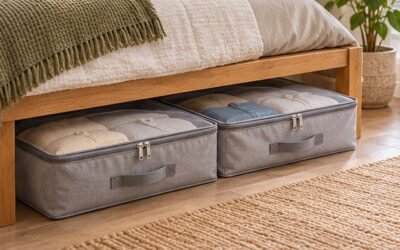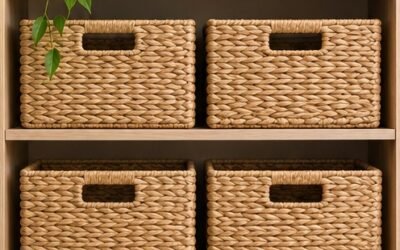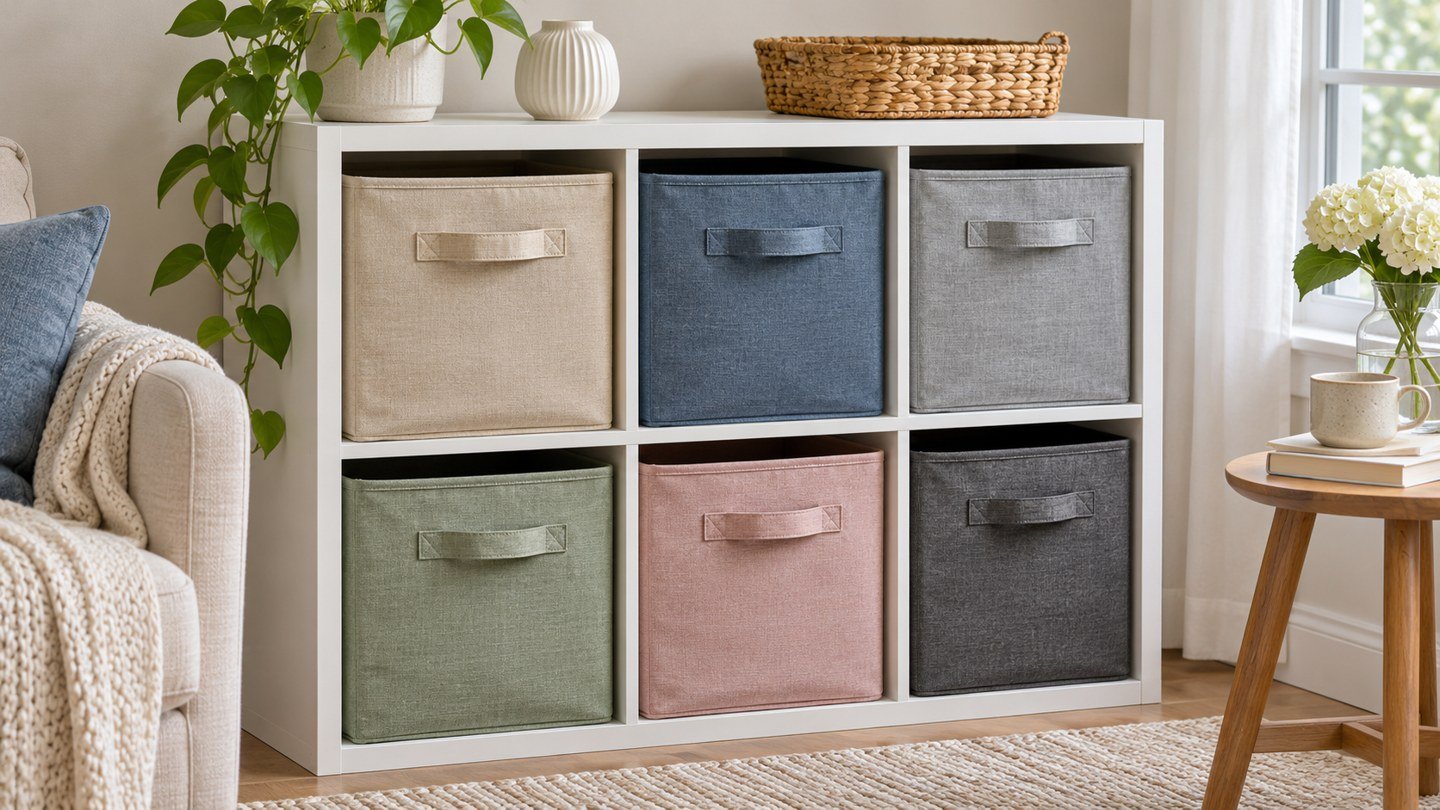
Buy storage cubes to fit the shelf opening and what you plan to keep inside. The useful measurements are the clear opening between the shelf edges and the cube's outside dimensions when assembled. Printed shelf dimensions can describe the whole unit, including the frame.
Measure usable space
Measure width, height, and depth in the exact compartment you intend to use. On a shelf with a front lip or a back panel, measure from the obstruction. Allow room for your fingers if there is no pull handle. If a sample cube slides easily when empty, test it again with the type of load you expect because soft sides can bow as a cube fills.
Match structure to the contents
Fold-flat fabric cubes work well for scarves and spare linens. A more rigid base is useful for toy blocks or craft supplies that shift when carried. Check whether the base insert is removable. A deep box hides larger things, but several shallow inserts inside it can make small objects easier to find. If you expect to carry books, look for a documented load limit and handles that are reinforced where they join the cube.
Think about daily access
Open fronts help children or adults see what belongs where. Closed fronts look tidy when you view the shelf from across a room. For shelves higher than your shoulders, a light cube with a reliable handle is easier to manage than a bulky one full of loose objects. Keep heavier contents low and follow the shelf manufacturer’s installation and anchoring instructions.
What to check before you commit
Before buying a full set, use a cardboard box of comparable dimensions to test the opening. Load it with a typical stack of textiles or toys and pull it forward. Check how much of the container can remain supported while you reach inside. If a filled cube has to come out entirely for every item, consider a shallower cube for that compartment.
Frequently asked questions
Should the cube fill the entire opening?
Leave enough space to slide it out comfortably. A tight fit can catch when the corners rub or when a soft-sided cube bulges under load.
Are washable cubes common?
Care instructions vary. Check whether the maker allows washing or specifies spot cleaning, especially if the insert is fiberboard or cardboard.
Related guide: Keep reading on Think & Buy.