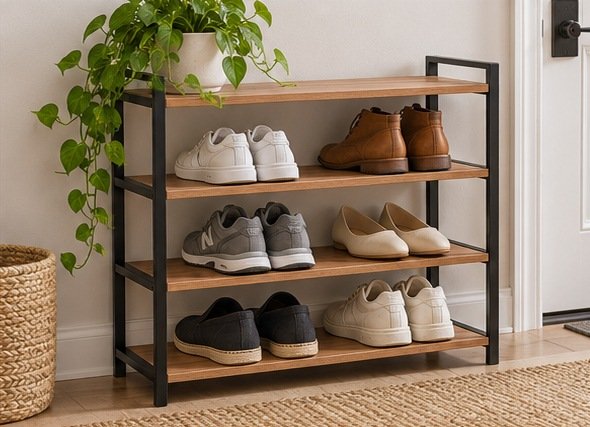
For a low bed, the usable height is the clearance beneath the lowest obstruction along the route the box will travel. Measure that first, then choose shallow containers that pull out from the side you can reach. Soft zip bags make sense for bulky bedding. Rigid boxes make more sense for items that need a flat, stable bottom. The right setup should let you reach one thing without moving the bed or emptying every container in front of it.
Measure the full path under the bed
Start with a tape measure against the floor in the usual position of the bed. Measure under the side rail, near the center support, and at the head and foot. Thick carpet and uneven floorboards can reduce clearance where a container enters. Include projecting screws, brackets, electric cords, and mid-bed legs in your sketch. The number to shop with is the smallest clear height where the container will actually travel. Allow room to avoid rubbing instead of buying a box that exactly matches your smallest measurement.
Next, measure the distance from the bed to the nearest nightstand, wall, or closet door. Compare it with how far the container must slide to expose its contents. A long, shallow box can be a poor fit if it has to come completely out just to lift a lid. Shallow boxes arranged in two short rows sometimes work better than a deep box that takes the entire width. Check the route with the bedroom door open and the bedding in its usual drape so your measurement reflects the way you use the room.
Pick a container for the contents
Soft zippered cases are a practical fit for spare sheets, blankets, and seasonal clothing. A case that collapses flat when empty can free up space between seasons. Measure it full, because a bag can bulge above its stated height even if the fabric footprint looks generous. For a low frame, buy a case with a stable edge and pack it until the zipper closes without strain. The label should face the opening of the bed so you can find a sheet set without pulling out the adjacent bag.
Rigid boxes are easier to load consistently when you're grouping shoes, craft supplies, or small items that should remain upright. Look for a flat interior and the internal measurements if the item has a fixed size. A tapered container may be many inches wider at the lid than at the bottom. The exterior height needs to include lid clips and molded handles. For an irregular object, cut a cardboard outline and trace it on the floor to check the dimensions you need before comparing product pages.
Decide whether drawers and wheels help
Wheels save effort with heavier boxes when the floor is smooth and level, but they also take space from the contents. Check whether the dimensions include the wheels and whether the casters are fixed or swivel. Fixed wheels generally want a straight pull, so avoid pairing them with a setup that needs a diagonal approach to get around a bedside table. On thick carpet, a fabric bag you can slide by a substantial handle may be easier to retrieve than a rigid drawer with tiny wheels.
If your bed has a matching drawer system, compare access from both sides and check compatibility with the exact frame series. A wide drawer can work well beneath a bed with two open sides. In a tight room, shorter drawers or a hinged lid that opens partway out give better access. Check the handle and lid with your knuckles in mind. A flush handle looks tidy but it may be hard to reach if the bed frame sits close to the floor.
Build around frequency of access
Sort the contents into weekly, seasonal, and occasional use first. Place the weekly group closest to the side you normally stand on. If you access shoe boxes from the foot of the bed, align their handles in that direction. Reserve deeper slots beyond the center support for occasional items only if you can retrieve them without moving furniture. Avoid stacking two shallow cases in a space where the top case barely clears the rail, since you may have to remove both every time.
Think about the way you make the bed, too. A visible handle is useful when it doesn't catch the bedspread or snag the vacuum head. A matching fabric color can make containers less noticeable if they sit close to the edge and the bed has open legs. In a room shared by two people, label groups based on who needs them or where they go after use. Writing “queen fitted sheets” saves more searching than writing “linens,” especially when several identical bags share a row.
Test one container before filling the whole area
Check online listings for the actual dimensions of each variant. IKEA's under-bed storage selection, for example, shows how cases and drawers in one category come in quite different heights and footprints. Product photography gives a sense of shape, but two beds can conceal very different underframe layouts. Mark the dimensions with masking tape and put a cardboard box of similar height under the rail. A sample check shows whether you have enough grip space and whether adjacent furniture will prevent withdrawal.
After buying one container, load it with what you actually intend to store and pull it in and out. If it binds when loaded, redistribute the contents or choose a shallower size. Try closing and opening the lid without walking around the room. Then estimate how many more units can fit while leaving a clear path around supports. A little unused space is often worth the convenience of being able to slide the cases without turning them sideways. Revisit the arrangement after the first season to see which containers you actually needed.
Decide how to keep stored textiles in good shape
Load clean, fully dry bedding and avoid overstuffing the container. If the bed sits near a frequently damp wall or a vent, pay attention to the environment under it before turning the whole area into storage. A zipper or lid can help keep dust off, but easy cleaning still matters when dust collects on the outside. Check whether the cover can be wiped or removed and washed according to its care instructions.
For a guest room, try one case for a complete change of bedding, including the pillowcases, rather than separating the set into several containers by type. Keep the contents label near the pull handle. In a child's room, lower-weight containers make sense for items the child will retrieve independently and return often.
Related guide: Read the companion buying guide.
Reference: See the source and specifications.
Frequently asked questions
Are under-bed organizers measured with their wheels and lids attached?
Check the dimension diagram or ask the retailer. Even when the nominal height appears suitable, the lid, wheel mount, or latch may be the tallest part.
Should I use a fabric bag or a plastic box for extra bedding?
A fabric case is flexible and can fold when empty. A rigid bin helps hold a fixed shape when stacked or repeatedly pulled out. For a low bed the packed dimensions will matter most.
How much space should I leave at the front?
Leave enough room for your fingers, the handle, and the lid or zipper to move freely. Test the actual withdrawal path because baseboards, nightstands, or a small rug can reduce the room available.