Choose a citrus zester by what you want the peel to look like on the plate. Fine shavings disappear into cake batter and dressings, while longer ribbons are easier to see and handle when arranging a garnish.
Compare rasp and channel designs
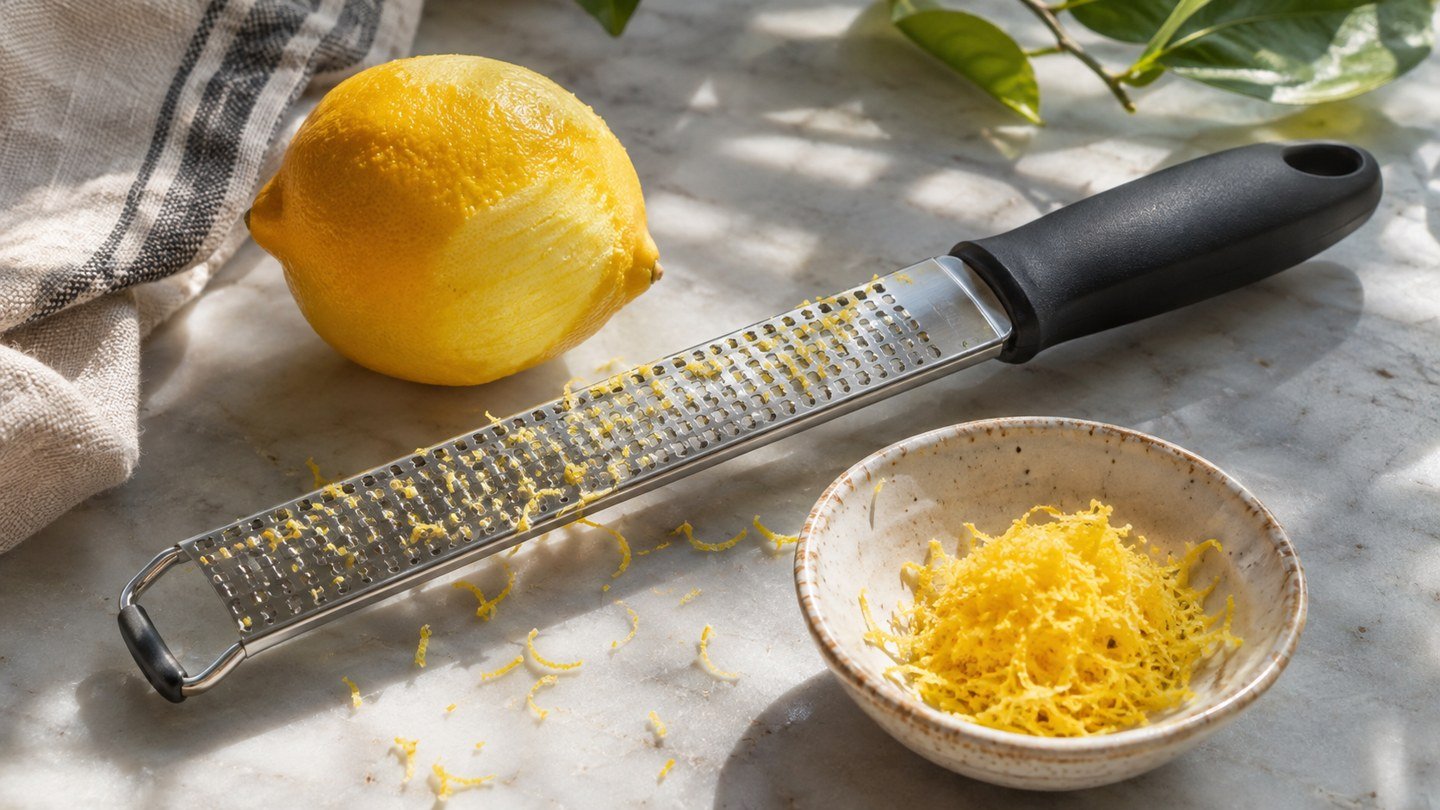
A rasp makes many fine shavings as you work across the fruit. Look for a narrow surface if you want to see where each pass lands or a wider surface to grate over a mixing bowl. A channel blade cuts a longer strip and gives you a different result for garnishes. If the listing calls both designs zesters, use the blade photos to tell them apart before adding either one to your basket.
Think about direction and grip
Decide whether you prefer moving the fruit against a supported tool or moving the tool over fruit held on a board. A longer handle gives you more room to hold it clear of the bowl, while a shorter one can be easier to steer around a lime. Check where the handle joins the cutting surface. A thick joint can collect damp zest and make it harder to remove at the end of prep.
Inspect the cover and cleaning instructions
A cover is useful when the zester shares a drawer with other utensils. Check whether the cover encloses the working edges and stays in place during storage. Follow the manufacturer’s cleaning instructions, and look for a design that lets you rinse residue from the back without touching the cutting edge.
Judge the result from one lemon
Make a few passes over the peel and see how much zest sticks to the tool. If you are working directly into a batter, look for a tool you can clear easily without scattering zest across the counter. For a garnish, check whether the strips have a consistent width and will hold the shape you want.
Frequently asked questions
Can I use a box grater instead?
A fine face can work if it produces the texture you need and fits the bowl. A narrow dedicated rasp makes it easier to see the area you have already grated on a small fruit.
Related buying guide: Read the companion guide.