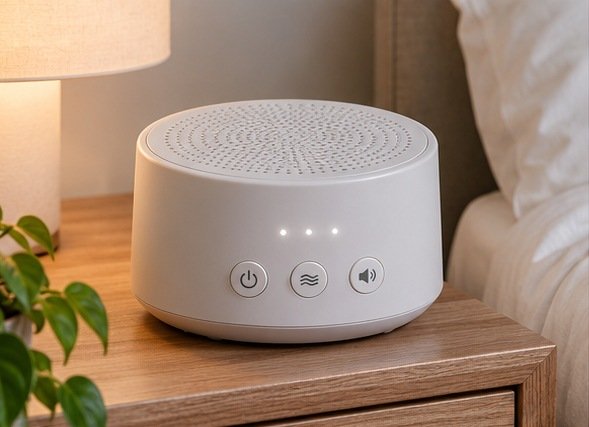
Choose a bedroom sound machine that has a sound you can tolerate for the time you plan to run it, a quiet setting you can control, and a place to sit that makes the controls easy to reach. A mechanical fan model provides a continuous sound. A digital unit can offer several sound profiles and timers. Try to identify which ordinary interruptions you want to make less noticeable before choosing between them. The same sound can feel different depending on where it is placed.
Identify the room sounds you want to address
Spend a few evenings noticing when the room changes. A short burst from the hallway and a steady appliance hum can call for different decisions. Write down which sounds happen when you're settling in and which repeat later. This helps you decide whether a timer fits your routine or whether you want a continuous setting. Look for simple changes to sound sources you can control, such as moving a small appliance or closing a door, before assuming you need additional sound for every situation.
A sound machine adds background sound. You can use it to make contrasts between the quiet room and intermittent sounds less obvious. It does not change how sound travels through walls or how loud the source is. If another person uses the room, compare preferences before buying. Some people find a soft continuous sound unobtrusive, while its character makes it difficult for others to ignore. Since the device affects a shared space, include a partner's reaction in any test. Choose something you can try at home under clear return terms if the sound is unfamiliar.
Compare mechanical and digital designs
Mechanical models use a fan or another moving component to produce sound. Yogasleep's Dohm is one example of a fan-based machine. Check whether the shape, openings, or motor settings change the character and loudness. A mechanical sound can be pleasantly consistent if you don't want to select tracks. Make sure it sounds acceptable from the position where you will place it, because a fan can transmit a different character through a hard table than a recording does through a phone.
Digital designs use a speaker and can offer recordings or generated sounds. See whether the choices include steady noise, fan-like sound, or recognizable patterns such as rain. Listen for a repetitive segment or a transition where the sound starts again. Some listeners barely notice a loop, while others focus on small changes when the room is quiet. Listen to the actual model whenever possible. An online clip is helpful for identifying the type of sound but your own speaker and volume setting change what you hear. Compare how the sounds behave at the quiet levels you expect to use.
Check the lowest volume and placement
Look for enough adjustment near your preferred low level. A wide control range can still jump too far between its first few steps. Set the machine on a stable surface according to its directions and try slightly different positions before raising the volume. The sound at the bed will change with distance and other objects around the device. Leave enough space for ventilation or sound openings and avoid putting it near places where bedding can cover it. Use it at the lowest setting that meets your purpose, and make sure you can still hear things you need to hear.
Power and button locations matter if the device is on the far side of furniture. Note where the cable runs and which way the controls face when the cord can reach. If the lights face the bed, check whether they dim or switch off without changing audio. A useful indicator can be distracting if it remains bright. Try the return-to-quiet process in a dim room. Adjusting levels should not require finding a phone or watching a bright display unless that already fits your habits.
Decide whether it needs timers or travel power
Compare continuous operation with an automatic stop. A timer is useful if you want audio only while reading or getting ready for bed. Check whether the sound fades or cuts off and how quickly the device can start again. Look up what happens after a brief loss of power if you use it through the night. Some models restore earlier settings and others stay off. Clear controls remain important even if you rarely use the timer.
Consider travel only if the machine will travel. A small rechargeable design saves space when an outlet sits across the room, but it adds a charging routine. Check the instructions for allowed use while charging. A corded mechanical model may be convenient for a fixed location and awkward in a small bag. Look at weight, cord storage, and the cost or availability of any proprietary power supply. If the machine is part of a guest room, a visible low setting is often easier for guests to find than a sequence of controls described only in an app.
Make a comparison over several ordinary evenings
Start at a quiet level and use the same position for a few sessions. Listen from the bed and the closest doorway. Try changing either sound or placement one at a time. Record which settings you actually return to instead of giving the entire sound library equal weight. If you sometimes need the room quiet for a call or an early alarm, see how quickly you can stop it and how reliably you notice necessary signals. A different location or a small change in volume may be all that is needed.
If you test a digital and a mechanical device, compare each at a level you can comfortably use. One may sound more acceptable in your room even if you prefer clips of the other in a review. For a shared room, leave time for both people to try control changes without having to remember the other person's selection. If you know you will use one profile every time, choosing a machine with a clear physical switch can simplify the purchase.
Compare the real controls before paying for an app
A phone control can be useful when the machine sits across the room. Look up which settings remain on the device when the phone is elsewhere. If everyone using the room can understand a single control and a clear indicator, a local interface may be enough. Consider whether you would want to use Bluetooth, a network, or a separate account just to adjust the sound. Base the purchase on a working control option you could comfortably use in a dim room.
Check whether a favorite profile or timer setting stays stored after the machine is unplugged. If you move it between a bedroom and guest area, saved settings can help, but a guest still needs a way to lower or stop the sound without looking up instructions.
Related guide: Read the companion buying guide.
Reference: See the source and specifications.
Frequently asked questions
Does a larger library of sounds make a machine better?
A choice of sounds is useful when you have clear differences in preference. If one steady sound works for you, choose based on volume, placement, and controls.
Can a sound machine block conversations outside the room?
It adds sound that may make interruptions less noticeable. For sound transmission itself, look at the source and path through the room.
Is rechargeable power necessary?
A corded unit suits a permanent location. Rechargeable power can be useful when you move it frequently and have a practical way to keep it charged.