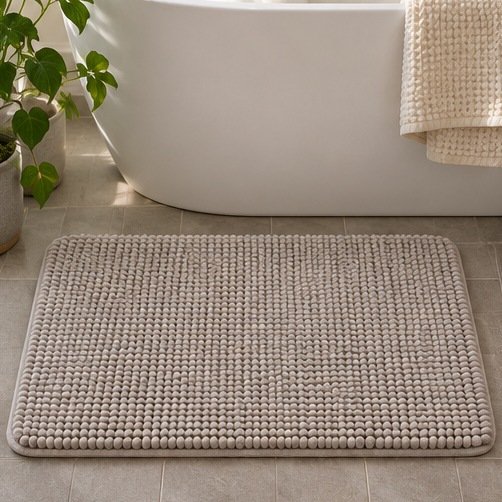
For a small bathroom, choose a mat that fits the spot where you step out and stays flat and stable on an appropriate floor. Measure the door swing and the space you have to dry the mat afterward. A washable low-pile textile mat can be practical for frequent use. A thicker mat offers another feel but can take longer to dry. Compare backing and care instructions rather than assuming a single material works on every tile or countertop finish.
Measure the floor in use
Stand in the place where you normally step out of the shower or bath. Check where your feet land and how much room remains between the door, furniture, and any radiator or other fixture. Open all nearby doors and drawers. Measure both the main footprint and any low clearance. A mat can physically fit the floor and still catch a door when it shifts slightly. Try a cardboard template when the space is tight, and remove it before using the bathroom.
Check the whole path, including where another person walks past the mat. If people leave the bathroom in different directions, a long narrow mat may cover the useful strip without spanning the whole room. If the step-down area is square, choose coverage based on the way feet actually land. Account for edging and rounded corners, which can reduce the useful area beyond what the outside dimensions suggest. A compact size that sits fully supported is usually more practical than a larger mat that needs folding around a corner.
Compare absorbency and how quickly it dries
A textile mat can take up water from bare feet. The time it needs to dry depends on construction and conditions. A thick cotton piece can feel substantial and hold more water, but may need better airflow between uses. A lower pile is useful when the mat shares the gap below a door. Check how often the bathroom will be used in succession. If the mat stays damp for hours, think about where it can be aired and whether a different size or material fits the routine better.
Alternative surfaces can have different cleaning and drying needs. Read care guidance for the exact material. Some firm surfaces feel cooler, and the contact with the floor matters as much as the surface you step on. Look at whether the maker gives instructions for placement and how water underneath should be handled. If you already own a mat that dries well but feels too small, assess whether a bigger version would still be easy to hang and wash. A larger absorbent surface can fill the space and still be the wrong choice when drying space is limited.
Check backing, edges, and floor compatibility
Read where the manufacturer permits the mat to be used, including floor finish and dry placement requirements. Some mats have an integral backing, while others may be paired with a suitable support as directed. Check resistance to shifting in the actual position and whether the edges sit flat. Keep both the floor and backing in good condition and change the arrangement if it does not remain stable or if the surface underneath stays wet. A mat intended for outside the tub should be evaluated for that location specifically.
Consider how the edge feels underfoot when approaching it from the side. A thick border can be noticeable in a narrow path. A thin item may also fold if dragged across the floor. Look at the way the sides are bound and whether the pile changes near the edges. Check clearance under closed doors without forcing them. If several people share the room, place the mat where it can be used without needing to move it each time. A flat, easy-to-check position is more reliable than a complicated arrangement requiring several pieces in an exact alignment.
Review washing, drying, and long-term care
Read the care label before ordering. IKEA's RÖDVATTEN listing provides an example with material, size and care information. Verify whether your machine can manage the exact mat, including its backing. Some mats require particular detergents or temperatures, or need to dry in a particular way. If you dry laundry on a rack, find the place where the wet mat can hang or rest without blocking the rest of the load. The decision affects how often you can return a fresh mat to the floor.
Inspect the bottom and edging regularly according to the instructions. Small deposits or wear can change how the mat sits. If one side curls after drying, check whether you are using the recommended process and whether the mat needs replacement. A spare that fits the same spot can be useful in a household that washes frequently, but only if you have somewhere dry to store it. Keep enough space to clean the floor beneath and let it dry as needed between uses.
Evaluate the mat over an ordinary week
Try the placement with your usual shower schedule. Notice whether the door remains clear, how the mat feels when it is used by the second person, and where splashes land outside it. If you need to move it every time, adjust the position or size before assuming a different material will help. Keep a simple routine for drying after busy times. A compact bathroom often benefits from one well-placed mat rather than several that make the passage harder to clean.
Measure a second spot separately if you want matching mats at the sink and shower. Hands and feet deposit moisture differently in those areas. A small sink mat can be easy to launder while a longer one may work around the tub. Consider whether the two actually need to match in material and thickness. Choose what fits each role and compare cleanup effort before turning a useful individual purchase into a set.
Check how the room handles visitors
In a guest bathroom, a mat should be obvious to use from the position where a visitor exits the shower. Leave a clear route to hang a damp mat or replace it when needed. If the room is part of a frequently used hallway, check the doorway from both directions and look for places where a corner could catch. Try the same arrangement with a laundry basket on the floor temporarily to see which spot remains practical when the room is busy.
In the main bathroom, compare a mat that stays in place between showers with one you prefer to remove and air regularly. The second setup needs a convenient supported drying location, plus room to let the floor dry as needed. If this routine is difficult in the space available, a smaller mat with suitable backing and a simpler care routine may fit better. Decide before buying a matched set you may not use evenly.
Related guide: Read the companion buying guide.
Reference: See the source and specifications.
Frequently asked questions
Is a thicker bath mat more absorbent?
Thickness can help some textiles hold water, but fiber, construction, and drying conditions matter. Check the exact care instructions.
How much door clearance do I need?
Measure beneath the door throughout its swing. Include edging, backing, and any pile above the mat's base.
Can I wash every bath mat in a machine?
Check the full label and the requirements for its backing and construction. Use the approved washing and drying process.