Choose for the dishes you make most
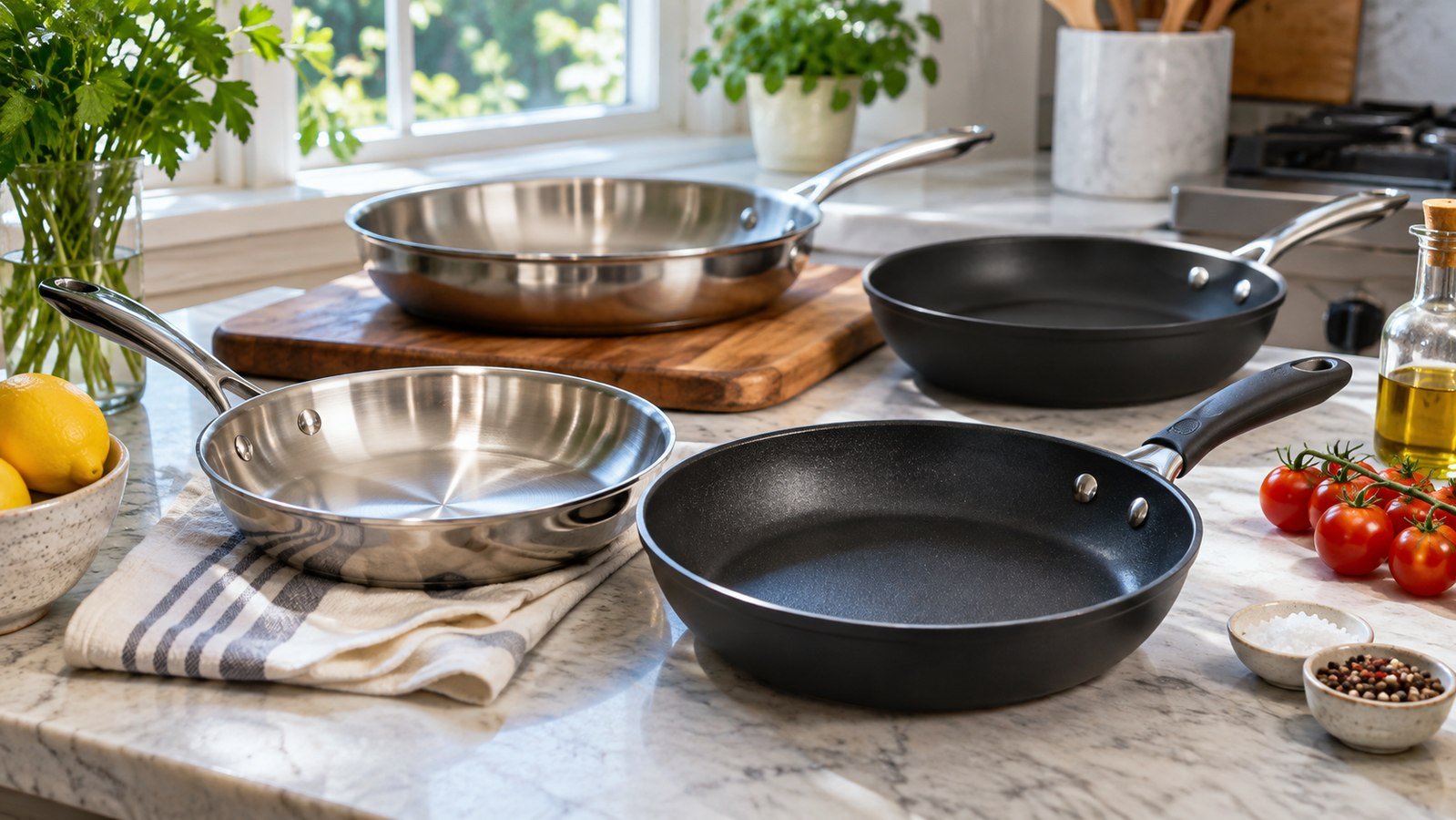
A nonstick skillet is a practical first choice when your recurring job is releasing eggs or delicate pancakes with little effort. Stainless steel makes a strong case when you frequently brown meat or vegetables and want to loosen browned bits into a pan sauce. Both decisions depend on how you cook at home, including your stovetop, how much food goes into the pan, and how much cleanup you will actually tolerate on a weeknight.
Think in terms of a normal week instead of an ideal collection. Write down the last five meals for which you reached for a skillet. If three were eggs or delicate fish, you may want easy release more often than a pan sauce. If three involved browning chicken or vegetables, stainless is worth trying. This comparison is based on cookware care instructions and purchasing criteria. Think & Buy did not carry out side-by-side heat distribution, coating wear, or release tests.
Understand what the cooking surfaces do
Uncoated stainless steel gives you a metal cooking surface. When browning food, the small bits left behind can become the basis of a sauce. A stainless skillet can fit a routine that ends with adding a suitable liquid and scraping the browned bits into it. For dishes you want to slide out intact, the process can require more attention to heat, oil, timing, and the recipe. If your usual style is to go quickly from refrigerator to skillet, expect to spend a little time getting familiar with a new pan.
Nonstick cookware has a surface designed to make food release easier. That may be especially useful when a dish’s appearance matters and it is fragile enough to break while you lift it. Different products use different coatings, and care instructions vary. Check the exact product page for recommended utensils, oven limits, and heat settings. The All-Clad care guide separates care advice by cookware type and discusses matters such as spray use on coated products. Use the guidance for the pan you own, including its handle and lid.
Measure the cooking area, not just the rim
A skillet’s advertised diameter generally tells you more about the outside or top dimension than about how much flat food fits in one layer. A pan with steep sides and one with gently sloped sides may have the same listed size and different cooking surfaces. For pancakes, inspect the flat area. For foods you stir or toss, look at how the side profile gives the spatula room to move. If you cook one serving daily, see whether a smaller pan fits the burner and nearby counter space better.
A wide pan can be convenient when you need to space ingredients apart. It may feel very different when you lift it with food inside. Look for the weight of the pan with and without its lid and check whether the larger model has a helper handle. Measure the storage spot, including what sort of pan or lid would sit on top. If you have a shallow sink, consider whether you can comfortably wash it while holding the handle.
Match the pan to your stove and oven
Find the exact stove type first. For induction, look for explicit compatibility and check the cooking surface diameter against the hob’s requirements. A pan sold as stainless steel can have different construction from another pan with the same material name. The coating on a nonstick model also says little about how the base interacts with the stove. Buying based on the full product specification avoids surprises when your existing range needs a particular base size or format.
If you frequently move a pan from the stovetop into the oven, compare the manufacturer’s stated limits for the entire configuration. A lid can have a different limit from the pan. A decorative handle or detachable component may also affect what the instructions allow. Check whether the item is intended for your specific cooking method before substituting one pan for another in a recipe. If oven finishing is a rare event, weigh that feature against comfort and ease of cleaning, which may matter every day.
Think about cleaning and replacement
Read the instructions before comparing claims such as dishwasher-safe. What the manufacturer allows and what it recommends for appearance or surface life may differ. Reviews can help flag how a handle traps water or where a rolled edge is hard to clean, but check care recommendations against the exact model before deciding how to wash it. If the instructions call for tools or a cleaning process you are unlikely to follow, choose a cookware surface better suited to your household.
Compare the possibility of replacing a single skillet with having to rebuy a set. An uncoated stainless pan and a coated nonstick pan will age differently. A stainless finish can discolor or show scuffs. A coated pan’s performance can change as its cooking surface wears. Factor in how carefully the pan will be used and stored. Two pans of the same material can also differ in quality of handle attachment, weight, stove compatibility, and warranty. Write those down before treating any price difference as purely a coating premium.
Buy one pan first if you are uncertain
If you have a workable skillet now and only want to solve one specific annoyance, choosing the other material for a complementary job can make sense. Keep stainless for tasks where browning and pan sauces matter and reserve a smaller coated pan for quick breakfasts. If space is limited, take the one that fits your most common cooking and try it out during the retailer’s return window if the policy permits. Bring the pan to the actual stove and make one familiar recipe with the instructions open.
Avoid buying a large set simply because the per-piece price looks low. Lids in a set may count as separate pieces, and extra pans take space even when they never heat food. Check two properly sized individual skillets against the set and compare the prices in dollars. You may find one reliable everyday shape is all you need. See our Kitchen & Dining guides for other practical upgrades or our espresso machine buying guide if you are planning counter space as well.
It can help to compare two pans in the store with the cooking motion you use most. A broad spatula needs space to move under food. A steep side keeps ingredients in when you stir, while a shallow flare makes it easy to slide a finished item onto a plate. On a busy stove, the length and angle of the handle affect whether it crowds a neighboring pot. Check the lid fit if you commonly cover a skillet. These choices are separate from the material and often determine whether the pan becomes the one you reach for.
Frequently asked questions
Which skillet is easier for eggs?
A nonstick skillet generally makes it easier to release eggs intact. Choose a size that fits the portion you usually cook, check the utensil instructions, and learn the heat setting that works for your stove and recipe.
Is stainless steel always induction compatible?
Compatibility depends on the construction of the exact pan. Check the manufacturer’s specification for induction and compare the base size with the requirements of your cooking zone.
Do I need to replace an entire cookware set to switch?
Start with the skillet size and material you use most. A single pan gives you a real way to compare the cooking surfaces at home before spending on a full set.