Start with the drink you actually make
An espresso machine is a worthwhile purchase when its daily routine fits your kitchen and the drinks you enjoy. Start by making a short list of what you order or brew during a normal week. Straight espresso rewards control over grind and shot preparation. A latte before work puts more weight on how quickly you can switch from brewing to steaming. An occasional weekend cappuccino gives you room for a slower routine. The right machine is the one you will still want to use after the novelty wears off.
Count the drinks you usually make back to back. Preparing two milk drinks creates a different workload from making one shot and pouring it over ice. Ask whether someone else in your household will use the machine, too. A setup that makes sense when you have ten quiet minutes might be a poor fit when two people are managing breakfast at once. This guide compares workflows and manufacturer documentation. Think & Buy did not test the example machines hands-on.
Compare the main types of machine
A capsule machine handles much of the measuring and preparation for you. The main purchasing variables are capsule availability, per-drink cost, waste arrangements in your area, and whether milk preparation needs a separate device. Check which capsule format the machine accepts before buying a case of coffee. Also compare the size of a finished drink with the volume you expect. A short coffee and a large mug can require very different routines even when they come from the same device.
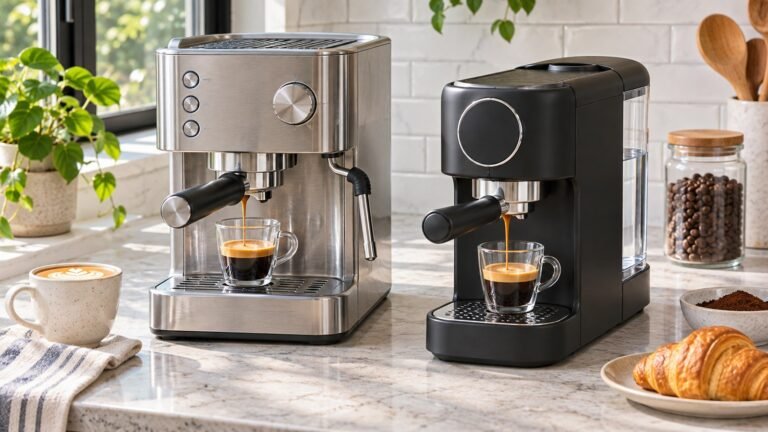
A semi-automatic machine gives you a portafilter and leaves you responsible for preparing the coffee bed. Many models offer preset shot buttons, but the user still handles the grounds, basket, and cleanup. A bean-to-cup machine usually combines grinding and brewing in one unit. It can make sense for a household that values repeatable button-driven drinks. Read the cleaning instructions first, particularly for any milk tube, carafe, or spout. A quick drink cycle can be followed by several cleaning steps.
Make room in the budget for the grinder
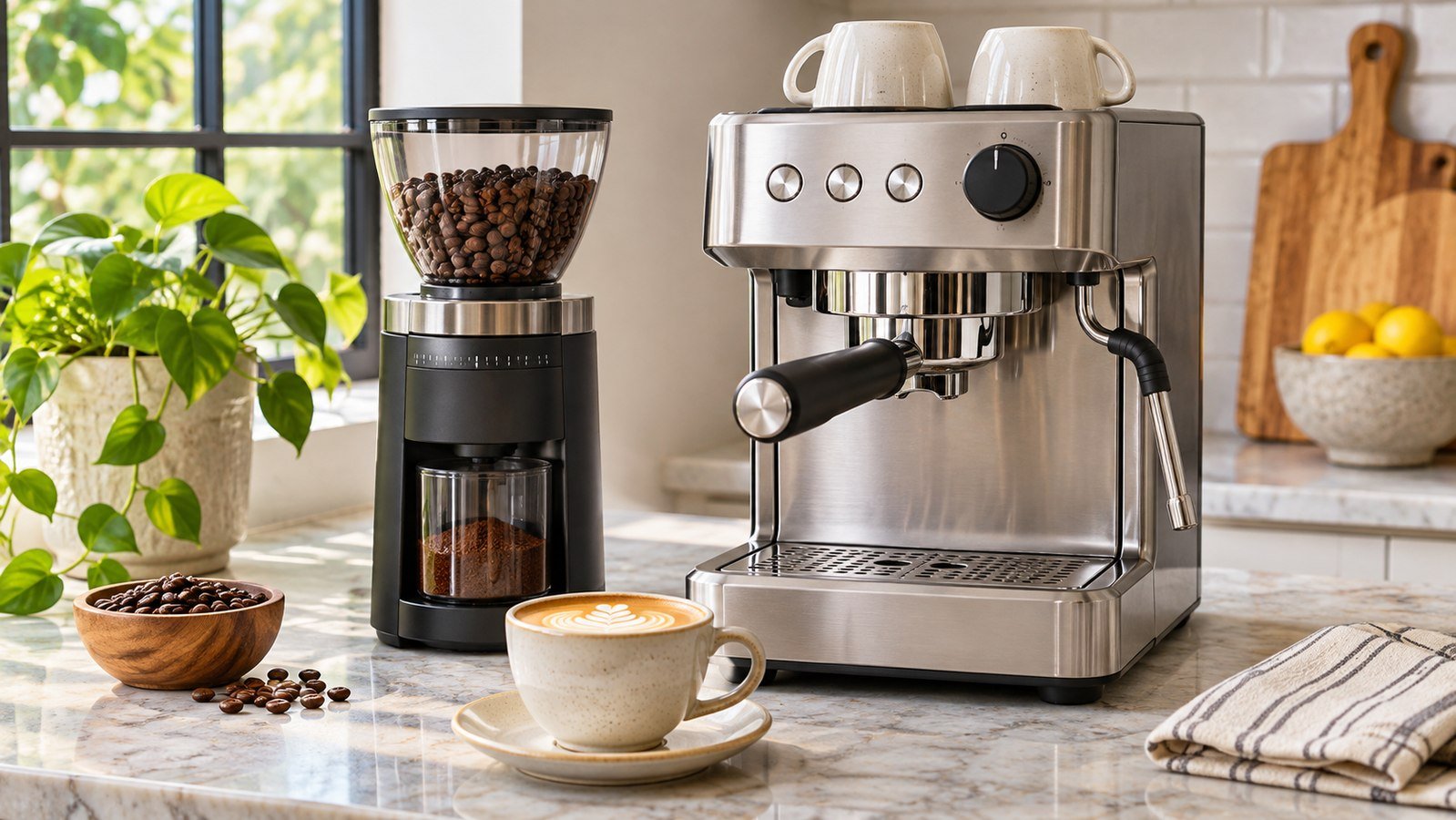
For a portafilter setup, the grinder is part of the espresso system. You need a way to dial the grind finer or coarser as beans change and to repeat the setting once you find it. If you own a burr grinder for drip coffee, check the maker’s documentation for espresso suitability and look at the range and size of its adjustment steps. Small adjustments become more useful when the difference between neighboring settings is obvious in the cup.
If you want to start with preground coffee, check for a pressurized or dual-wall basket. It creates resistance at the basket outlet, which can make preparation more forgiving when the coffee grind is fixed. A conventional single-wall basket relies more on the coffee bed for resistance. Before buying a used machine, ask which baskets and accessories are actually included. Product photos are a poor substitute for an inventory, especially when a seller has combined parts from several machines.
Pay attention to workflow and counter space
Take a tape measure to the exact spot where you plan to make coffee. Include space behind and beside the machine for cord routing and steam wand movement. Look above the machine for a shelf that might block a top-fill reservoir. A grinder, scale, and drying area could take up more space than the machine itself. If the machine must slide forward for a refill, check how easy that will be once it is plugged in and the counter is crowded.
Read the quick-start directions and picture a full cycle. Turn the machine on, prepare the basket, brew, introduce milk if desired, discard the puck, and clean the parts the manual calls out. A machine may heat quickly while your basket and cup still need preparation. The Breville Bambino product page describes a quick-heating system and a manual steam wand. The De’Longhi Stilosa support center is another example of where to get the exact U.S. model instructions.
Compare milk preparation and cleaning
If most drinks include milk, decide whether you enjoy holding a pitcher and adjusting the wand by hand. It gives you something to learn and is a natural fit if you want to make different styles of foam. A machine with assisted milk preparation can be a better household fit when speed matters and several people use it. Before deciding, compare the after-use cleaning cycle on each. A system that is easy to wipe or rinse can be preferable even if producing the drink takes a little longer.
Also check how the machine handles moving from a shot to steam and back. Imagine the order you will serve drinks. If you pull one shot, steam milk, and repeat for a second drink, any waiting and rinsing happens twice. If the manufacturer allows the workflow, brewing both shots before steaming milk could fit better. The practical question is whether the instructions describe a sequence you can live with on an ordinary morning.
Build your shopping checklist
Write down your all-in budget in dollars before reading listings. Add the machine, grinder if you need one, compatible basket or tamper if missing, cleaning products, and any pitcher or scale you plan to use. Start with the basics. An elaborate accessory kit can tie up money before you learn what slows you down. Compare the delivered total, return window, warranty coverage, and who handles service. Check the manual for water and descaling guidance, then confirm that any supplies it specifies are easy to buy.
For a first shopping trip, shortlist two machines with different workflows. Download both manuals and check the reservoir, basket, steam steps, and accessory list. Make a quick diagram of the counter and give each setup an honest estimate of how much usable space it leaves. If starting from scratch, it can be worth putting part of the machine budget toward a grinder. See our Bambino versus Stilosa comparison for two concrete examples, or browse Coffee & Espresso for related reading.
Before using a new machine for the first time, read the setup and priming directions for the exact model. Find out how often the manufacturer recommends cleaning or descaling and whether its guidance changes with local water hardness. Keep the manual accessible so you can check the approved process when the warning light comes on. Ask a used seller when the machine was last serviced and account for cleaning supplies in your first-month budget.
Frequently asked questions
Do I need an espresso grinder on day one?
A compatible pressurized basket can be a practical starting point if you want to use preground coffee. If you want to control extraction with a single-wall basket, put more emphasis on an espresso-capable grinder. Before ordering, make sure the required basket actually comes with the machine you are considering.
Does a higher pump pressure rating mean better espresso?
A pump’s published rating does not tell you the pressure at the coffee bed during a shot or how well the whole system handles a particular coffee. For an everyday purchase, the basket, grinder, available support, and workflow tell you more about the setup you will use.
What is the simplest way to choose between two machines?
Compare their manuals while thinking through one normal morning. Count which steps happen before and after the drink, check the delivered price with the necessary accessories, and pick the setup that fits both your routine and available counter space.