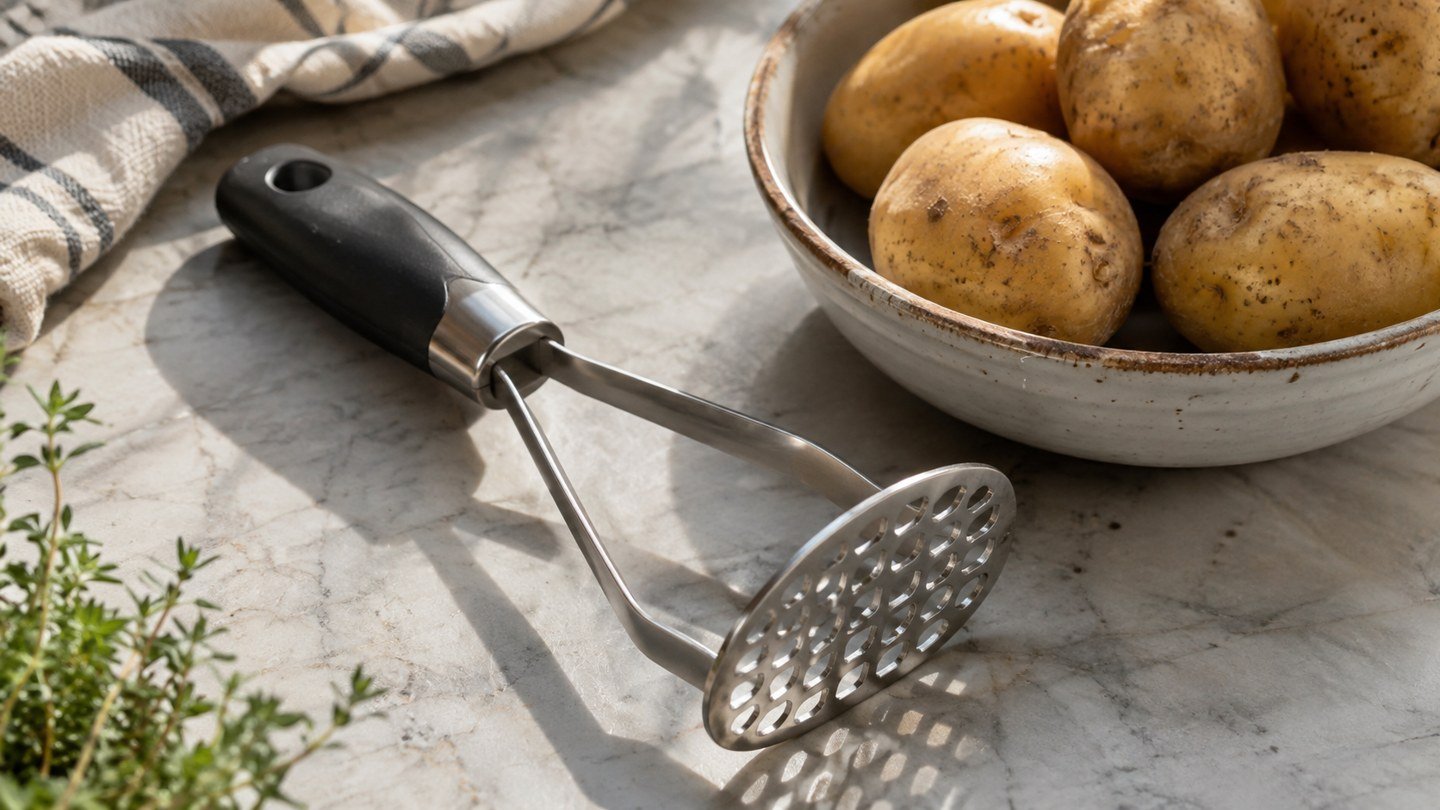
A potato masher should reach across the base of the pot and feel steady as you press. Choose its head and handle around the batch size and the texture you like.
Compare wire and perforated heads
An open zigzag head lets larger pieces move around the wire and can be convenient for a rough mash. A perforated plate pushes potato through several openings and can give a more even texture over repeated passes. Check how closely the head reaches curved edges in your typical pot. A rectangular plate that fits a wide pan may leave a ring untouched in a small round saucepan.
Check handle length against the pot
Measure the depth of the vessel where you usually mash. Leave enough handle above the rim to keep a comfortable grip throughout the stroke. A long upright handle can help with deep sides, while a broad grip may distribute pressure more comfortably when you make a large batch. Inspect the connection to the head for movement that could make it difficult to direct pressure.
Match material and cleanup to your routine
Check what your cookware manufacturer permits if you mash directly in it. A firm head can scrape an unsuitable finish if the pot or pan moves under light pressure. A tool made of several pieces may take extra cleaning around joints and underneath the plate. Check care instructions and whether the head fits upright in your normal drying space.
Compare on a small portion first
Mash a small batch in a narrow vessel, then try a wider vessel if you regularly make food for a group. Notice whether potato collects around the outside of the head or in the openings. A head that clears easily between strokes can be more useful than a bigger plate if you seldom make a full pot.
Frequently asked questions
Does a masher make the same texture as a ricer?
A masher presses ingredients in the pot and lets you decide how many pieces to leave. A ricer pushes portions through a die and suits a different prep routine and texture.
Related buying guide: Read the companion guide.