Start with the ingredient that needs to pass through. A sieve for dusting powdered sugar can be small and shallow. One for rinsing quinoa needs enough room to stir the grains without spilling them, plus a mesh that keeps them from escaping. A sieve for smoothing custard has to sit securely over a bowl while you pour.
Mesh fineness
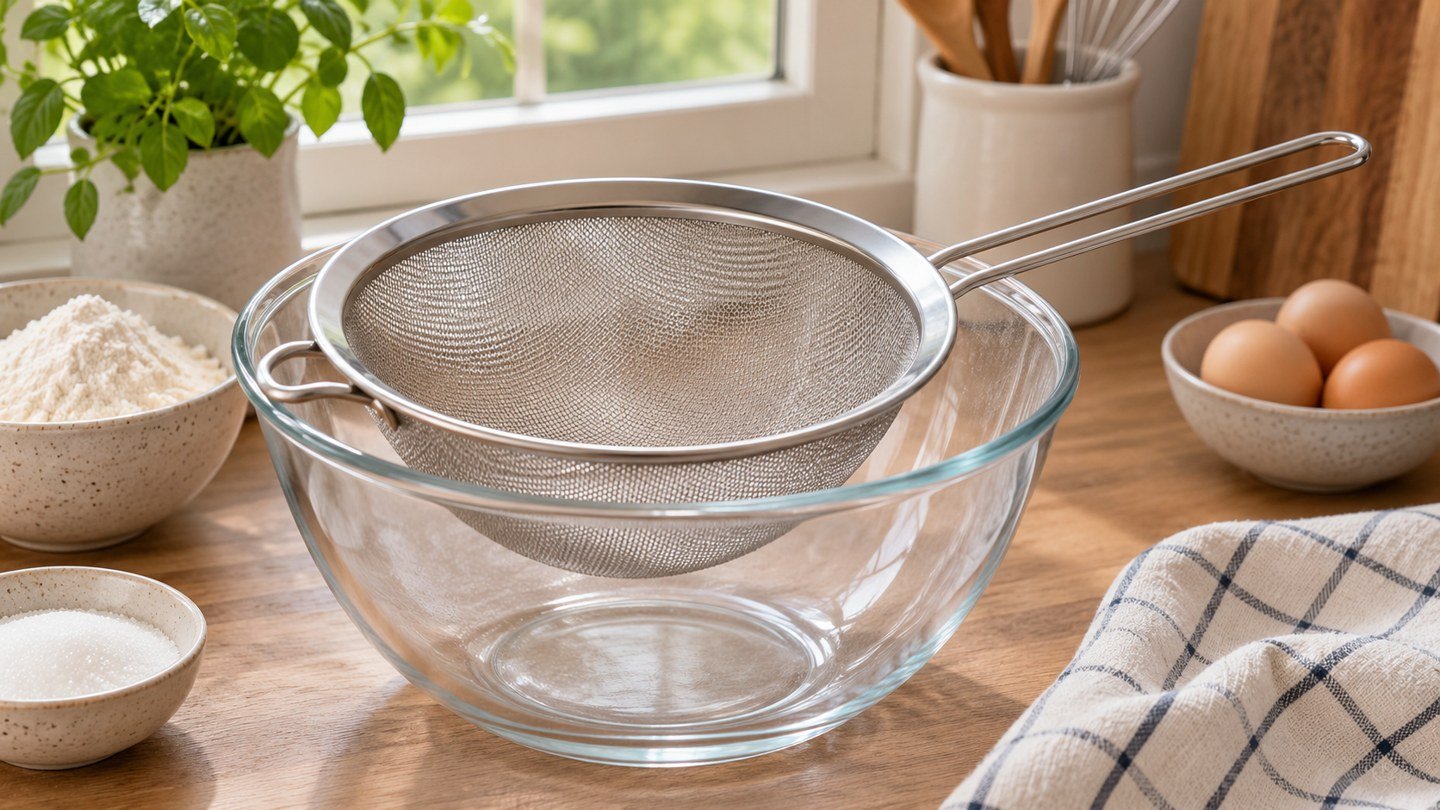
Check what stays behind and how quickly the liquid needs to drain. A very fine screen catches more pulp in a fruit purée, but it also slows the pour and takes more effort to rinse. If the listing describes the weave only as “fine,” look for a photo with a familiar ingredient for scale. When you routinely sift flour and strain small seeds, two different mesh sizes may cover those jobs more comfortably than one.
Bowl fit
Measure the opening of your usual bowl. A handle and opposite resting hook need to reach across the rim without the basket bottom touching the liquid. A deeper basket gives you more working room for a handful of washed grains. A shallow one gives you better control when dusting a cake and fits more easily in a drawer.
Frame and cleaning
Examine the joint where the mesh meets the rim. A smooth joint leaves fewer places for damp flour or pulp to collect. A rigid frame is easier to steady against a bowl while scraping soft ingredients through with a spoon. Follow the manufacturer's wash instructions, rinse from the back of the mesh after use, and let it dry before nesting it with other utensils.
What to check before you commit
For a side-by-side test, put a spoonful of the same ingredient into each sieve. Compare what passes, what stays in the basket, and how much remains after a brief rinse. For wet ingredients, repeat over the bowl you actually use. A fine screen that performs beautifully under the tap may be awkward if its hook shifts when you press from above.
Frequently asked questions
Will a sieve replace a pasta colander?
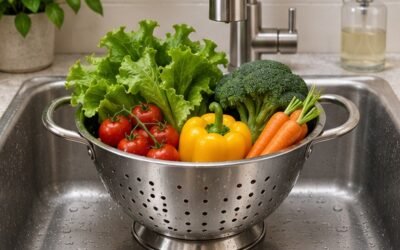
It can drain a small portion, but a large colander offers more room and drains quickly through larger openings. Use the sieve where the colander's holes would lose the food you want to keep.
What should I measure before ordering?
Measure the bowl opening and drawer length. Check both basket diameter and overall length, including the handle and hook.
Related guide: Keep reading on Think & Buy.