
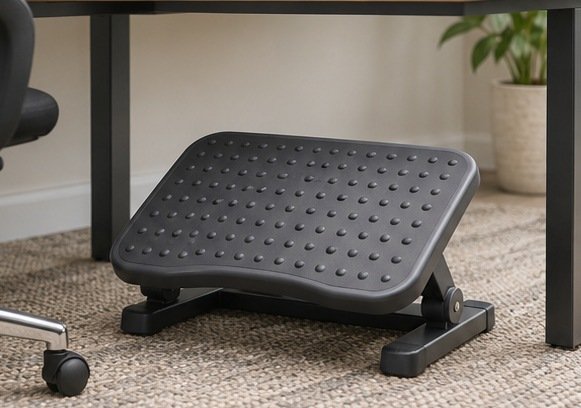
Choose a desk footrest by the gap between your feet and a usable support surface after you've set your chair for the work. A simple fixed platform can help at a desk used by one person. An adjustable model makes more sense if the chair moves between heights or other people share the desk. Measure space underneath before ordering. A platform that is tall enough on paper may still leave too little room for your knees or chair to move.
Set the chair for the work first
Use your normal keyboard, mouse, and desk. Find a chair arrangement that lets you reach the work without lifting your shoulders or stretching unnecessarily. For a fixed-height desk, CCOHS's chair-adjustment guidance discusses using a footrest where the chair must be raised to suit the work surface and feet need support. Follow appropriate ergonomic guidance for the overall setup. If the desk or keyboard location itself can be changed, consider that first rather than trying to solve several mismatches with one extra object.
Once the chair is placed, check the position where both feet can rest naturally together. Use the footwear you normally wear indoors. Measure the height to the floor and where a supportive platform would begin. Allow some space to change position. A footrest used at one angle may touch the toes and miss the heels if the dimensions are too small. Test with a stable suitable support if you're adapting an existing workspace, and use only something intended to bear the relevant load in regular use.
Compare platform height, tilt, and width
A fixed platform offers one setting and can feel consistent. Verify height at the spot where your foot rests, since a sloping deck gives several heights across its depth. An adjustable unit can be useful if you want to move between more than one position. See which measurements are given in the specifications. Overall height can include side pieces and might not describe the surface under your feet. If adjustments are made using detents or separate risers, check how easily all parts seat in the supported settings.
Some tilting models remain at a set angle. Others pivot with foot movement. Try the motions you expect to use. A gentle rocking surface may feel helpful to someone who shifts position often and distracting to someone who prefers a stable plane. Compare whether you can rest both heels and forefeet comfortably at your usual position and whether you can change stance during the day. For two people sharing a desk, record which heights fit each of them and how many steps it takes to switch between them.
Measure clearance under the desk
Check depth behind the chair, usable width and the available height above your knees after the feet move onto the platform. A modest footrest can leave too little clearance under a low drawer or keyboard shelf. Try moving your chair as you would to sit down and stand up. Notice where casters or legs need to pass and whether the footrest's corners would affect that motion. If you use a sit-stand desk, check clearance and accessibility in the positions you actually use and keep the footrest out of the movement area when appropriate.
Account for cables, power strips, and the legs of the desk. Do not place the platform where it covers equipment or presses on a connection. If one part of the floor is sloped or uneven, find a suitable supported position. Make sure the platform fits the surface and placement specified by the maker. A heavy model can stay in position yet be awkward to move for cleaning. A lightweight design can work if its contact points don't shift under normal use.
Choose the surface and base for daily use
Compare grip on the working face and the floor. A surface with texture can help one type of footwear stay put and be uncomfortable under bare feet. Check where water or dirt can collect, and read instructions for cleaning. Footrests with a washable cover may need the cover removed and dried before reuse. If more than one person uses the setup, a simple wipeable surface can reduce upkeep. Inspect the actual edge where the feet rest and how it changes when the platform tilts.
Check the base with one foot and with both, following the instructions. Look for unwanted movement in ordinary use and stop if the arrangement does not remain stable. Some models need a particular type of surface. An office mat can change the grip and chair movement, so test with the real flooring. Use the footrest as specified, and don't assume it can substitute for a step or support standing. Choose placement that remains clear for other people who walk through the room.
Try a normal workday and compare
Use the platform for several typical tasks, including typing, reading, and moving the chair away. Note whether it gets in the way when you switch activities. If you change the chair and platform together, adjust one at a time thereafter so you know which part needs attention. See whether you can keep a natural usable position without having to slide the platform back repeatedly. Make room to move and take breaks as appropriate to your work. If the platform only works when everything else sits in one exact place, review the larger desk configuration.
Check setup with all of the desk's ordinary accessories in use, including a bin or storage below it. A small device is most useful when it can stay without forcing another item into a less convenient position. Decide where it will go when you need to clean or share the desk. An adjustable footrest earns its place when the adjustments are reachable and helpful. A stable fixed one can be just as useful for a known arrangement.
Check whether the setting stays useful through different tasks
A footrest you use while typing might sit in a different place when you lean back to read. Observe where you put your feet in three common tasks. If you want a movable design, make sure you can reposition it safely as directed and that it will stay in the intended position once there. A fixed arrangement can be better when you rely on a stable reference after getting up. Highlight the positions that matter before shopping by number of settings.
If you use an adjustable chair and work in more than one room, take measurements in each spot. One footrest thickness may suit a fixed table and be too high under a shallow desk. Measure with the floor coverings in use, since that can change base placement or clearance. A small amount of useful width for ordinary posture changes is more valuable than a model that only feels comfortable when you place both feet on specific corners.
Make any changes in the context of the overall workstation. Keep the platform where it cannot obstruct ordinary movement, and reassess if you change your desk or chair.
Related guide: Read the companion buying guide.
Reference: See the source and specifications.
Frequently asked questions
Is tilt adjustment necessary?
Only if you prefer a different foot position or sharing makes it useful. Check an ordinary flat or fixed-angle option against your setup.
What measurement matters first?
Set the chair and work surface, then measure foot support height, deck area, and clearance above your knees.
Should I put it on carpet?
Check the base and manufacturer guidance. Test that it stays stable on your intended floor with enough room for the chair.

