
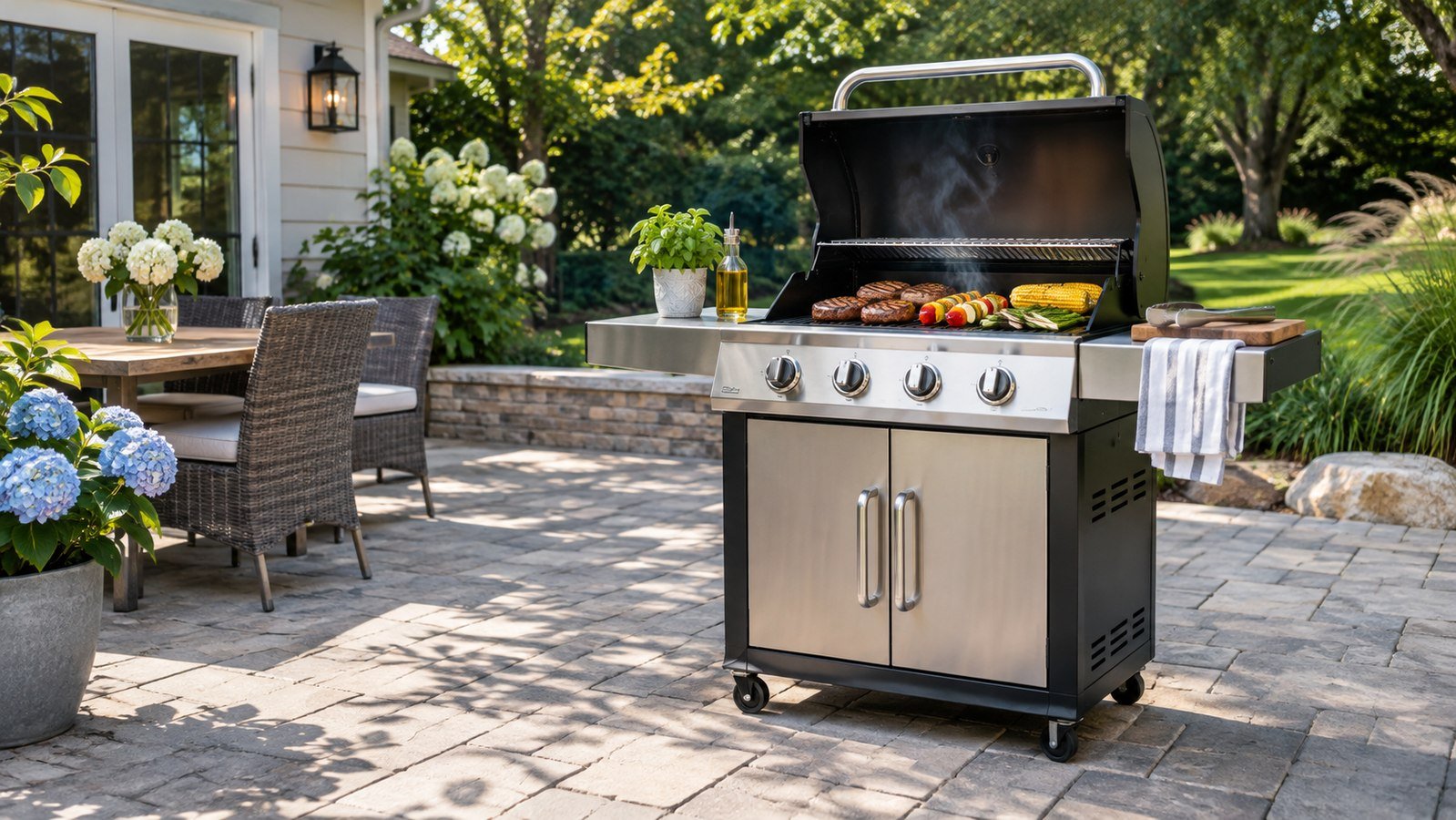
Start with the patio and the meals you cook
A good gas grill earns its place when it fits both the outdoor space and the way you cook. Begin by counting how many people you feed on a normal evening and how often you host a larger group. A small grill can suit an ordinary dinner while leaving room to move around outside. A larger cooker is useful when you often want different heat zones or need to prepare dishes at the same time. The larger footprint also has to fit your patio every week, including the months you rarely grill.
Measure the area you intend to use and check the grill’s owner’s manual for placement requirements before committing to that spot. Allow for the lid to open and side tables to extend. Check shared property rules if applicable. Gas grills are outdoor appliances. Use the model only where the manual permits, and follow its clearances and fuel instructions. Our advice is based on manufacturer documentation and shopping criteria. Think & Buy did not perform temperature-mapping or cooking tests.
Compare burners and usable cooking area
The burner layout is useful because it determines how you can divide the cooking surface. If burgers and vegetables often share the grill, separate controls can help you create different zones. If you want to cook larger items by indirect heat, see how much main grate area is left after you designate the area above an active burner. The number of burners alone does not establish how evenly a grill heats or how low it can run. Compare the width and depth of the main cooking grid with the food you usually make.
Separate the primary grate from the warming rack when reading capacity claims. A rack can be handy for buns or for holding finished food, but it offers a different kind of space from the main cooking surface. If your decision depends on fitting a particular cast-iron pan, measure its full width including the handle and confirm that it fits with the lid closed. Also read the directions for cookware and accessories. A model’s accessory rail or compatible griddle may matter if you intend to use it weekly. An accessory you may never buy need not determine your budget.
Decide between propane and natural gas
Pick the fuel arrangement that is available and appropriate for your patio. A propane model uses a cylinder specified by the manufacturer. The space for that cylinder and access for changing it are worth checking at the store. A natural gas model needs an appropriate supply and compatible installation. Check the manual and arrange any work on a fixed supply with a qualified professional. Buy the model built for your fuel source and follow the manufacturer’s restrictions on conversion. Similar-looking versions may have different components and instructions.
The Weber Spirit E-310 propane model page identifies its exact model number and 3-burner design. The Weber owner’s guide index shows documentation for the relevant Spirit propane family. Use the exact model number when checking a listing or asking which accessories are included. Buying used makes that step more important because the brand and name on the lid may identify a family rather than a specific version.
Compare carts, cleaning, and parts
Picture unloading a tray of food onto the grill. Will the side shelf hold both the tray and the tools you frequently use? If the shelves fold, check the total width in cooking position and how the shelf locks into place. Examine the wheels and whether the grill is easy to position on the type of surface you have. If you plan to roll it over a threshold, test a display model or compare wheel diameter and weight to the actual route. Allow space to lift off a cover without scraping a wall.
The way the grate and grease tray come out can matter more in daily use than a long list of extras. Look up the cleaning instructions for your preferred grill and see which parts need attention before storage. Check whether the grease collection system is easy to reach. Ask what happens when a burner, grate, ignition component, or tray needs replacement. Weber’s parts schematic for the Spirit E-310 is an example of how to check for named, model-specific parts. Availability and shipping cost can vary.
Budget for ownership and delivery
Compare delivered cost rather than the advertised price alone. Include setup or assembly if you need it, the appropriate fuel equipment, and a suitable cover if the manual recommends one for storage. Check the retailer’s return and pickup arrangements. A large cart is more difficult to pack up than a tabletop appliance, and its condition on delivery matters. If the grill arrives assembled, inspect it against the supplied documentation and ask the retailer how it handles missing or damaged parts.
Think about how the grill will fit through your gate or along the path to the patio. Shipping carton dimensions can be different from the assembled size, and a door handle or tight corner can be the limiting measurement. If the purchase is a gift, confirm the fuel source and installation requirements with the recipient first. An impressive upgrade is only useful if the patio can accommodate it appropriately and the person using it can access the controls and cleaning areas.
Make the purchase around regular use
Shortlist one grill sized for ordinary dinners and one with an extra burner or larger grate. Compare their manual illustrations, replacement part listings, and side table space. Decide whether the extra cooking area would be used weekly or just once a year. If one of the two costs significantly more, name the actual meal or workflow it makes easier. A larger spend makes sense when it buys a difference you can use.
Review the owner’s guide for assembly, light-up, shutdown, and storage directions before the first cook. Keep the grill in the outdoor location it was designed for, with the specified clearances. If you cannot meet the instructions at your preferred spot, choose a suitable location or a different appliance that fits. Browse Outdoor & Garden for related buying guides and Kitchen & Dining for indoor cooking purchases.
If you are choosing between a shelf and a side burner, imagine clearing the patio table of everything except the food, tongs, and a clean serving tray. Decide where each item will go while the lid is open. This little rehearsal often exposes why cooking area alone does not describe the experience. If you regularly work with a second person, make sure both can move around the outdoor space without needing to step behind a hot grill or reach across the cooking area. Follow the documented clearances even where a compact grill makes the spot look roomy.
Frequently asked questions
Do I need three burners for a patio grill?
Three burners can give you more flexibility when using different heat zones. A smaller grill may suit two-person meals if the grate fits the dishes you normally prepare. Compare the actual cooking surface rather than using burner count on its own.
Is a side burner worth buying?
A side burner is useful when you regularly want to heat another dish outdoors while the main grate is full. If you mostly serve sides from the kitchen, a plain prep shelf may give you more space and be used more often.
Can I use a gas grill in a garage with the door open?
Use the grill outdoors in a location that meets its instructions. A garage is an enclosed structure even with its door open. Check the model instructions before choosing any placement near buildings or overhead surfaces.