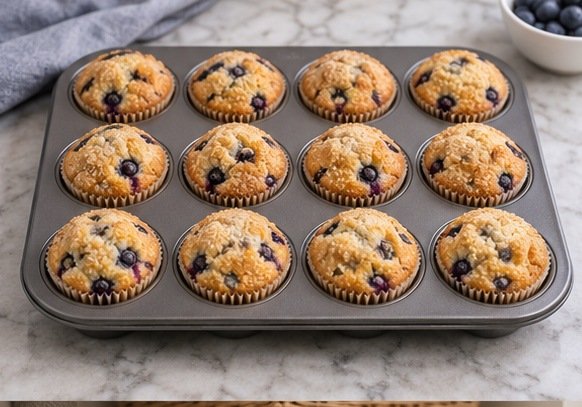
Choose a muffin pan with cups that match the recipe you use most, and check whether you can lift it from your oven comfortably. A standard-size metal pan is a practical reference for recipes written for it. A mini or jumbo pan earns its place if you regularly make that size and have tested instructions for it. Compare measurements and release details before choosing a decorative finish or extra feature.
Match the cup rather than just the count
Measure the opening, depth and base of a cup if you are comparing to an existing pan. A twelve-cup label gives the number of servings but doesn't tell you the size of each one. Cavity shape affects batter depth and the amount of liner you need. Read the recipe and use its fill guidance. If you want the tops to spread a certain way, consider space between cups as well as their dimensions. King Arthur's muffin-pan selection offers examples of standard and other bakeware formats to compare.
Mini cups can be useful for small snacks, while larger cavities can suit a recipe that's designed for them. Treat a change in size as a change to the bake. Seek tested adjustments for the recipe and check doneness as it directs, rather than transferring the time unchanged. Measure the size of paper liners you already own if you intend to keep using them. One labeled size can use a different base diameter depending on the maker. A liner that folds over the sides may change the shape or make filling harder.
Compare material and finish
A light metal pan can be a useful starting choice when a recipe assumes one. Darker or heavier pans can produce different browning or behave differently in your oven. Compare actual results on a familiar recipe before blaming the batter. Read manufacturer directions for temperature, surface preparation, and allowed contact. A pan with decorative thick edges may look sturdy but still need care to avoid damaging the interior while releasing muffins.
Flexible silicone models can simplify some releases but need the stable support and handling described by the maker. Check whether you need a separate baking sheet or an approved support frame, then include it in the total footprint. A strong rigid pan is easier to move without flexing. If you plan to bake with someone else, pick a surface and preparation method both people can repeat. For a recipe with sticky additions, decide whether suitable liners or the required pan treatment make the bigger practical difference.
Look at outside dimensions and grips
Measure the exterior including handles and compare it with the usable oven rack. Check against the appliance instructions, particularly for compact ovens. A pan that fits while empty may be hard to slide in level when loaded. Try holding an equivalent shape with your oven mitts and thinking through the lifting movement. A broad lip is helpful only if you can touch it from both sides without hitting another piece of equipment or losing control.
Check which length goes across the oven and how much clear area remains beside a second sheet, if you can bake that way under the directions. Two six-cup pans can be handy for small batches and may fit in a narrow dishwasher. One twelve-cup pan makes a single full batch easy to carry if the available kitchen space supports it. Compare where the pan rests during filling and where you put it down to cool. A wide footprint can consume more preparation space than expected.
Inspect release and cleanup
Look at the corners and seams of each cup. A smoothly formed cavity can be easier to wipe, while a complicated join can trap cake residue. Read instructions for greasing, pan liners, and maintenance. A coating doesn't guarantee every recipe releases without help, and the appropriate cooling time matters. Avoid making a choice on the promise of easy release without checking the usual method you use, including which tools are safe around the surface.
If you often reuse the pan in one baking session, account for the temperature and cleaning instructions between batches. Choose a tray that can dry completely before stacking. A deep nesting stack can save room but may rub a coated pan unless protected as directed. If a pan lives in a lower cupboard, see whether you can lift it without moving heavier cookware. Cleanup is part of deciding which pan will stay in use. Compare how long it takes to clean one real batch before buying a second copy.
Try an ordinary bake and keep a record
Use one recipe whose usual results you know. Follow its supported cup dimensions and preparation steps. Fill and move the pan in the normal way, then observe browning, rise, and how the muffins release after the expected cooling time. Differences can come from batter, rack position, oven behavior, and finish. Note the pan and position instead of trying several substitutions in one bake. A useful comparison gives you a repeatable method the next time you make the same recipe.
If you share batches, try the way you carry or store the cooled muffins. A larger format can save cycles while putting more work on a small rack. A smaller tray gives flexibility when you bake occasionally or want a different quantity, provided the recipe supports it. Keep a short note with your usual pan, liner, and number of filled cups. That beats guessing about an old recipe when another tray looks similar in the drawer.
Compare your baking schedule with the cabinet space
Think about how often you make a second batch and what happens while the first one cools. If you keep the next portion unbaked for a time, follow recipe guidance for how to handle it. A second identical pan may allow a more predictable rhythm, while a small secondary tray can make sense when the batch size changes. Amounts of batter, fill depth and support all matter. Compare actual cup dimensions before buying two pans solely because their names match.
Look at where you put liners, scoops and the prepared tray. A wider pan may be easy to move in a large kitchen but crowd a small table once you set out the ingredients. Measure the counter with the tray in the direction you like to fill it. Make sure you can reach all the cups without moving another bowl over them.
If you attend potlucks or share batches, decide whether you will carry the cooled pieces in separate storage. A pan intended to bake them may be an awkward travel container, especially if it has wide grips or a deep foot. Fit your existing storage to the planned portion size before spending extra on a package with closely related accessories. Choose the tray for reliable fit, prep and cleanup first.
Related guide: Read the companion buying guide.
Reference: See the source and specifications.
Frequently asked questions
Is a twelve-cup pan always standard size?
Cup count and dimensions are separate. Check opening, depth, and volume against the recipe and liner.
Can a muffin recipe go straight into mini cups?
Check for tested timing and fill guidance for the smaller format. Cup size changes how much batter and baking time you need.
Are paper liners essential?
Use what the recipe and pan maker recommend. Liners can make handling easier, while a properly prepared pan can work for supported recipes.