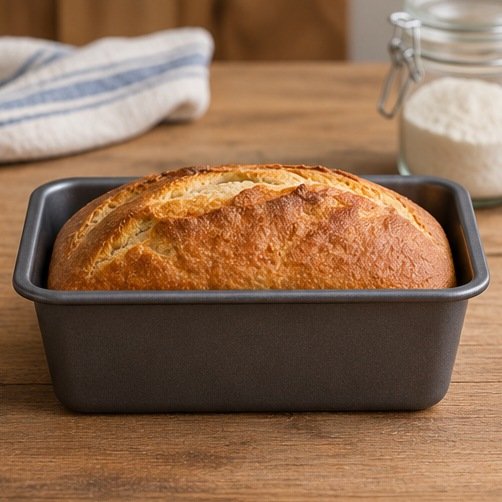
Buy a loaf pan that matches the dimensions and material called for by the quick bread recipe you bake most. A nominally larger pan can spread a batch more thinly and change how it bakes. Compare interior dimensions, depth, and the material before choosing handles or a finish. If you bake several recipes, start with the one you make often enough to benefit from a reliably familiar fit.
Read the recipe before taking measurements
Find the pan size in the recipe notes and check whether it describes an inside length and width. Some loaf pans taper, so a broad rim and a narrow base can produce different capacities even on pans with similar top measurements. If the maker lists the pan volume, use it as another comparison point. Follow the recipe's fill guidance and avoid assuming that almost any pan with the same length will behave identically. King Arthur's baking pan guide discusses why dimensions and the type of pan matter to baking results.
Compare the recipes you use during an ordinary month. A taller banana bread and a lower tea loaf may each be based on a different size. A small mismatch can require you to reassess bake time and the depth of batter. Check tested instructions for alternatives rather than changing every variable at once. When baking a new recipe in a familiar pan, verify the capacity and fill before you mix the batter. A product photo of bread extending above the rim gives little information about how much batter was actually in the pan.
Choose material and finish for consistency
Metal loaf pans are available in several finishes and thicknesses. A light-colored metal model can be a good starting point when the recipe assumes one. Compare the exact product's heating and care instructions. A darker surface can affect browning, which matters when you prefer a softer crust or want the center to set without the sides becoming too dark. Shape and oven also play roles. Look for recipes and troubleshooting advice written for the same material rather than trying to transfer the same observed time between every type.
Glass and ceramic designs can offer an attractive serving appearance and different heat behavior. Check limits on preheating, temperature changes, and equipment. Use the recipe guidance for that material when available. A metal pan that fits your recipes is useful if you want a consistent reference for trying new variants. If you already own a decorative presentation pan, buy a second one only if it addresses a regular mismatch in size or heat behavior. A good set can include one practical working shape and one that does a distinct job.
Compare coated and uncoated interiors
A coated pan can help with release, but follow the instructions for surface preparation and allowed utensils. Quick breads with fruit or sweetened ingredients may still benefit from the lining or greasing called for in the recipe. An uncoated pan can suit bakers who prefer a simple lining routine. Check how sharply the corners are formed, since batter and cleaning materials can collect near joins. Look at photos of the inside corners and ask for a dimension drawing if a particular shape matters.
A parchment sling, when appropriate to the recipe and pan, can help lift a loaf. Decide whether its edges can remain clear of heating elements and whether it gets in the way when you need to grasp the pan. Leave time for the loaf to cool for the period specified by the recipe. The ability to remove it without force comes from the pan, the baking method, and the cooling stage together. Use only cleaning products and tools intended for the finish after it cools.
Inspect rim, handles, and oven fit
Measure outside dimensions including lips and handles. Check whether two pans can sit on the oven rack in the arrangement your recipe or oven documentation permits. An extra-wide handle is useful only if you can use it with your oven mitts and have space to reach it. Inspect how smoothly the pan rests on a level counter. A narrow bottom can feel less secure while you pour batter unless your work surface and handling suit it. Run through the route between your prep spot, oven, and cooling rack before you choose.
A long narrow pan can put handles close to the oven walls. A compact model can make access easier but may not match recipe volume. If you use a small counter oven, consult the manufacturer's cookware requirements and make sure there is enough clearance with a rising loaf. Don't assume a pan is suitable for a different appliance simply because it fits on the rack. A pan that you can lift confidently is more useful than one that gives you an extra portion but is awkward to remove.
Review one ordinary bake after purchase
Use a familiar recipe and follow its pan preparation first. Observe the depth of batter before baking and compare the result with previous batches. Notice when you check doneness, how evenly the surface browns, and how the loaf releases after the instructed cooling period. Compare pan dimensions and oven conditions before attributing every difference to the coating. Keep a note of the exact pan you used and where you placed it.
When the pan is cool, wash it as directed and check how much cleanup the edges require. See whether it nests without damaging the finish and whether it can dry before you put it back. If you own more than one loaf size, a label in your recipe notes is easier than guessing from memory. Decide whether you need a second pan once you have compared two ordinary recipes in the first one. A useful combination covers changes you actually make, such as a small loaf for one household or a full-size loaf to share.
Check how you would use two pans
Think about whether you actually bake two loaves at once or only want different sizes for alternate recipes. If you bake together, compare the oven and recipe instructions and account for the room around both pans rather than using the empty rack dimensions alone. Keep a suitable place on the counter for each hot pan. Check the route to the cooling area with oven mitts so you know whether it remains clear when two people are working.
If you plan to make a half batch, look for a tested scale and appropriate pan. Small individual loaves have different proportions and can need different instructions. For ordinary full batches, a matched pair may make more sense when you regularly bake the same recipe for two households. Mark pans by interior size if the exterior shapes are similar. That way you can repeat a known bake without measuring the cabinet contents first.
Related guide: Read the companion buying guide.
Reference: See the source and specifications.
Frequently asked questions
Can I use a different pan from the one in my recipe?
Look for a tested substitution and check dimensions, material, fill depth and doneness guidance. Treat a different pan as a meaningful change.
Do larger pans always make larger loaves?
A fixed amount of batter spreads differently in a larger pan. Match the pan to the recipe and the shape you want.
Is nonstick essential for quick breads?
It can help with release, but suitable lining, preparation and cooling also matter. Use the method supported by the pan and recipe.