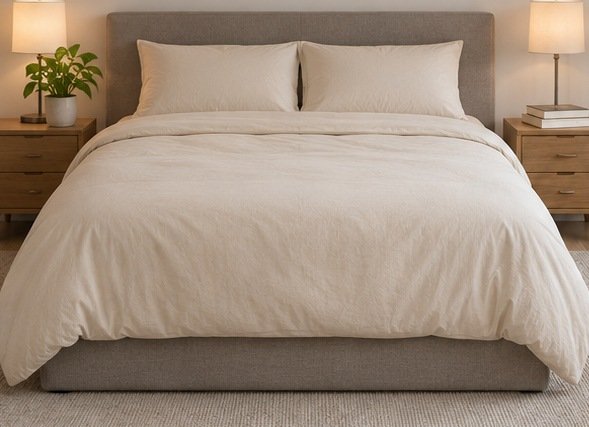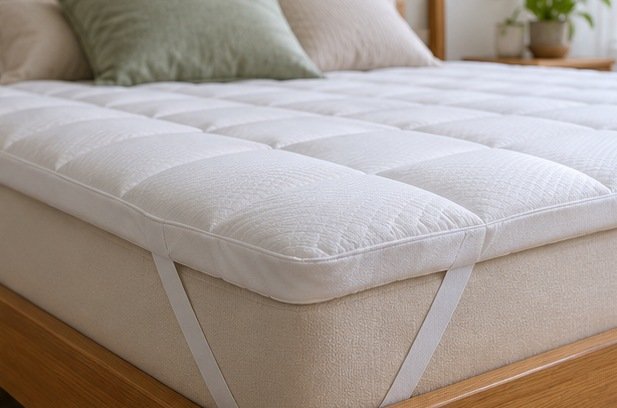
Choose a mattress topper to adjust the surface feel of a mattress that is still flat and usable. Identify the change you want before deciding between foam, latex, and fiber. More thickness produces a bigger change in some constructions, but the new height affects sheets, protectors, and how you get in and out of bed. If the mattress or its support has a sag, examine that first. A topper placed across a depression tends to follow the shape of what is beneath it.
Describe what you want to change
Try to name one issue in ordinary terms. Perhaps the surface feels hard against your shoulder, the cover feels too warm, or movement on your side disturbs a partner. A model sold mainly for cushioning can feel quite different from one intended to add a buoyant layer with more resistance. If reducing heat is the priority, assess the existing protection and bedding, too. Several layers above a topper can change how its surface feels against you.
Check the bed in daylight after stripping the sheets. Look for depressions, gaps at the frame, or a base that has shifted relative to the mattress. Follow the maker's instructions for the mattress and support. A topper may soften the perception of minor surface texture, but it does not rebuild worn support. If you and another sleeper need different feels, decide whether you prefer a whole-bed change or a separate topper on each side with a seam you can live with.
Compare foam, latex, and quilted fill
Memory foam tends to mold around pressure and often recovers more gradually after you move. That can appeal to people who enjoy a closer feel. Response varies by foam and by conditions, so look for specs and a useful trial period rather than relying on a generic material label. If you shift positions often, assess how easily you can roll on the model and whether it feels different once the bed has been occupied for some time.
Latex toppers often recover more quickly and can feel springier. Compare firmness and construction within the category. A fiber-filled or quilted topper adds a different kind of loft and can be useful for people who want a softer surface rather than a thick foam layer. Fill can shift or compress, so check whether the care guidance includes fluffing or turning. Sleep Foundation's topper methodology identifies several properties reviewers can evaluate besides raw thickness. Use such properties to form a shortlist rather than assuming all versions of one material feel alike.
Measure thickness, mattress height, and sheets
Write down actual mattress width and length rather than using only the size name. Some product dimensions leave a small gap around the edges. Check whether that would sit under your usual sleeping area or make a visible step under the sheet. Measure total height with the topper and protector. Compare it with the supported pocket depth of the fitted sheet you own. Tucking a shallow sheet tightly around a thicker bed can pull corners up or change how freely a soft top layer settles.
Consider whether the increased height is practical at the edge of the bed and with nearby furniture. If you prefer to sit while getting dressed, try a rough height check before ordering. A thick layer can change the edge feel as well as the height. A thin model can be easier to rotate or remove for cleaning. Someone who expects to carry it up narrow stairs or store it between visits should compare packed and unpacked dimensions and think through where it will stay flat or be stored as directed.
Check how the topper stays in place
A cover with straps around the corners can help on some mattress profiles. Check the strap placement and length, especially if your mattress has rounded edges or sits inside a raised frame. A grippy underside can be simpler if the mattress cover is compatible with it. A fitted protector placed over both components can help keep the bed tidy when its manufacturer allows the layer arrangement and the pocket fits the final height.
Read care instructions for the whole assembly. A removable cover helps only if you can unzip and refit it without lifting more than you can manage. Many foam cores require spot treatment rather than washing. Pay attention to how the cover should be dried as well as how it should be washed. When comparing fiber models, confirm that any home washing instruction makes sense for the size of your machine. If laundry frequently needs outsized capacity, factor that into what you will actually use.
Check the trial and test one variable at a time
Look up the exact retailer's terms, including when a trial starts, who pays return shipping, and what packaging it requires. A topper that arrives compressed may be difficult to restore to its delivery dimensions. Check how long the maker says to allow it to expand and what setup it recommends. Keep documents and note the last day you can start a return if that is part of the purchase decision.
Start with the bedding and pillow you normally use. Change only the topper at first so you can tell what it does to the surface. Notice how easily you turn, whether the corners shift, and whether the extra height changes your movement around the bed. Compare a few ordinary nights if the trial allows. Bring a partner's observations into the decision when you share the bed. The sensitivity of a mattress and topper combination is a reason to value flexible returns as well as specifications.
Decide which parts of the purchase you could reuse
If you already have deeper sheets, a washable protector that fits the combined height, or a spare bed where a topper could be used, record those dimensions before setting a budget. A compact topper plus a fitted cover that already works can cost less to put into service than a deeply discounted thick model that needs all-new bedding. Check dimensions even if all the items use the same named size.
If you change the bed seasonally, look up how the topper should be stored between uses. A model that can be rolled under the manufacturer's directions may be practical in a small home. For something that must stay flat, find a suitable location and account for the weight when moving it. If you shop in person, check the firmness of an example in a configuration close to yours. A showroom topper placed over an unusually soft bed only gives you a partial picture of the result on your mattress.
Related guide: Read the companion buying guide.
Reference: See the source and specifications.
Frequently asked questions
Does a thicker topper always feel softer?
Firmness and material matter as much as height. A thicker firm layer can feel more resistant than a thin soft one. Check both specifications when they're available.
Can a topper fix a mattress with a deep sag?
Inspect the mattress and base, and use the manufacturer's support guidance. A topper follows the underlying shape and is best used to change the surface of a usable mattress.
Should my mattress protector go over it?
Follow the instructions for both products. A protector that goes over the topper must accommodate the full height without being stretched beyond its recommended fit.