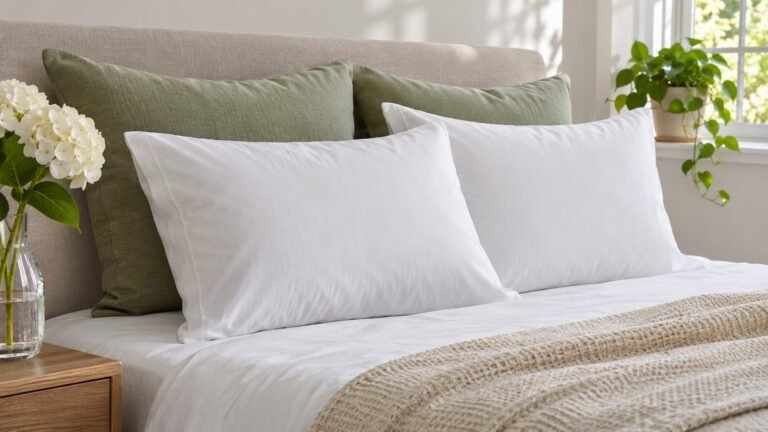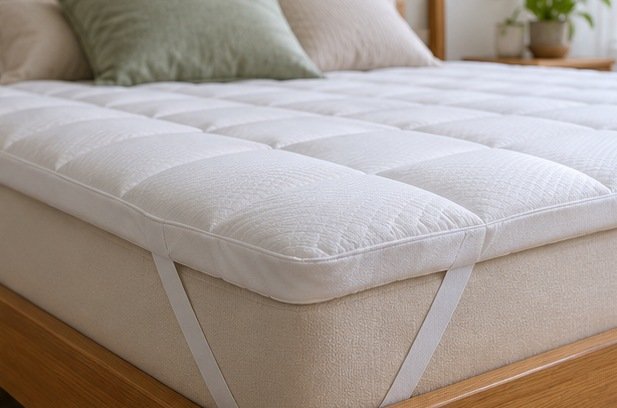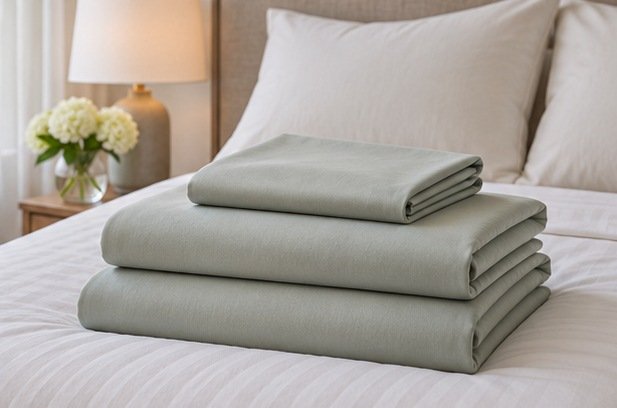
Choose cotton percale when you like a crisp, matte surface with a more structured feel. Choose cotton sateen when you prefer smoother drape and a little sheen. Compare two actual products at similar quality once you know the feel you want. Fiber, yarn, finishing, and fabric weight can all change how a set behaves, and the weave name alone cannot tell you whether a fitted sheet will stay on your mattress.
Understand what each weave feels like
Percale commonly uses a simple alternating weave that produces a balanced appearance and a matte finish. People often describe it as crisp. The exact feel varies across products. Some sets are more structured straight from the package, and regular washing may change their feel. If you are shopping from images, look for a description of weight and finish rather than using visible wrinkles as the only clue. A small swatch, when available, helps reveal whether you like the texture against your hand.
Sateen typically has longer yarn floats that contribute to a smoother, more reflective surface and softer-looking drape. It may also show more sheen on one side. Cotton sateen describes a construction, separate from the fiber description in a listing. Check the fabric label if you want all cotton. Brooklinen's sheet guide is an example of a manufacturer explaining the distinction between its percale and sateen products. Other sets can differ, even at similar prices and advertised thread counts.
Compare thickness and feel with your normal bedding
If you tend to like airy, structured bedding, lighter percale can be a useful starting point. If you prefer a sheet that hangs closer against your skin, sateen may be more appealing. Evaluate the sheet with the blankets or quilt you actually use. A change in the protector or top layer can affect how the bed feels as much as swapping one woven sheet. Avoid using the weave label as a guarantee of temperature preference.
Pay attention to density and finishing when considering two sets. A heavy percale and a light sateen can feel different from familiar stereotypes about the weaves. Compare fabric weight if the manufacturer provides it. Look for an intelligible description of yarn and fiber rather than assuming a very high thread count is sufficient evidence of comfort or durability. If you feel a sample, try it flat and then loosely folded over your hand to see how easily it falls around an edge.
Measure the mattress and fitted corners
Measure length, width, and the total height including the topper and protector. Check whether the size name on the listing matches what you measured and whether the pocket-depth claim describes a maximum, a recommended range, or the unstretched seam height. A sheet that barely reaches around the mattress may pull off a corner after you move. One with excessive depth can collect material at the edge unless the elastic does a good job of drawing it in. Ask for size guidance if you are close to either end of the quoted range.
Compare elastic and construction. Continuous elastic may grip around a mattress, while well-positioned corners and clear head or foot labels can make a set easier to install. If the top layer has a different shape from the mattress, see whether the sheet can keep the layers neatly aligned if their respective instructions permit it. For the flat sheet, check actual dimensions and how much you want to tuck under. Two same-named sets can have different allowances for a deep bed or taller sleepers.
Look up washing and drying details
Read the care label before deciding how the weave will fit your routine. If you like a fresh, smooth finish without ironing, check reviews and instructions for washing the exact set. A fabric can wrinkle if left resting wet or folded tightly after drying. Some people like that texture and others prefer a smoother cover. Compare whether you can dry it the way you currently do laundry and whether washing instructions place it in a separate load.
Consider how much you use the sheet as a surface. Long floats can be more exposed to abrasion or snags in certain fabrics, while a crisp fabric may be less agreeable if you dislike the way it feels when folded or tucked. Differences across products matter, so look for experiences with the same set at a similar wash schedule. Check whether pillowcases and sheets are available individually. If one piece wears earlier, a single replacement can be more practical than buying a second full bundle.
Compare the set contents and practical cost
List what you use today. Some bundles omit the flat sheet or come with two standard pillowcases when you need king pillowcases. Confirm the exact pieces and sizes before looking at price. If you do not use a flat sheet and the maker sells separately, compare a fitted sheet and pillowcases directly against the set. If you change pillowcases more frequently than the sheets, see whether you can buy a second pair that matches the fabric and color.
Measure shelf space for an extra set and consider wash frequency. Two sets can be useful if you remake the bed before the first load is dry. But buying multiples before you know how the first one fits can lock you into a corner depth or finish you end up disliking. Check the trial or return conditions, including whether a first wash affects eligibility. Retain the label and order details if the purchase relies on having time to compare how the fabric works at home.
Use a short, fair at-home comparison
Start with the same mattress protector and top layers when testing a new set. Note whether the corners stay on, how the fabric feels the next morning, and whether it shifts against the duvet or blanket. When you wash it according to the directions, check the fit again after drying. Look at the fabric in daylight and compare the sound, texture, and drape with your existing favorite. That comparison can help you decide which characteristics are due to the fabric and which come from the way it is fitted on the bed.
Evaluate color and seam details in daylight
If two sets feel similar, check how their seams sit around the pillow and the fitted corners. A flange or closure can show more plainly on thicker fabric. Find out which direction an envelope pillowcase opens if you like to turn it over. See whether the color you want remains available as an individual piece. A manufacturer may sell similar-looking shades across multiple collections, so order by the exact name when pairing pieces.
Hold an available swatch beside your duvet or headboard under the room's usual light. Sateen's sheen can emphasize a color differently from a matte percale. If appearance is a secondary concern, give greater weight to whether the corners stay put and whether the fabric feels comfortable under the bedding you already own.
Related guide: Read the companion buying guide.
Reference: See the source and specifications.
Frequently asked questions
Is sateen made from a different fiber than percale?
The terms describe weave constructions. Both can be made with cotton, and the label tells you the actual fiber content.
Does higher thread count guarantee better sheets?
Consider yarn, fabric weight, construction, care, and feel alongside the count. The number doesn't predict how a sheet will fit or whether you will like its texture.
Which should I choose for a deep mattress?
Fit comes first. Choose a set with suitable dimensions and a supported pocket depth for the mattress, topper, and any protector you use together.