Start with the recipes on repeat
An immersion blender is worth considering when you regularly want to blend in a suitable pot or jug. Measure the size of the container and think about what goes into it. A small batch of dressing and a full pot of soup are very different tasks. List two recipes you make often and compare how you would blend, pause, and clean up for each. If your largest batch is infrequent, do not let it determine the size of the unit you handle every week.
Match the shaft and head to the vessel
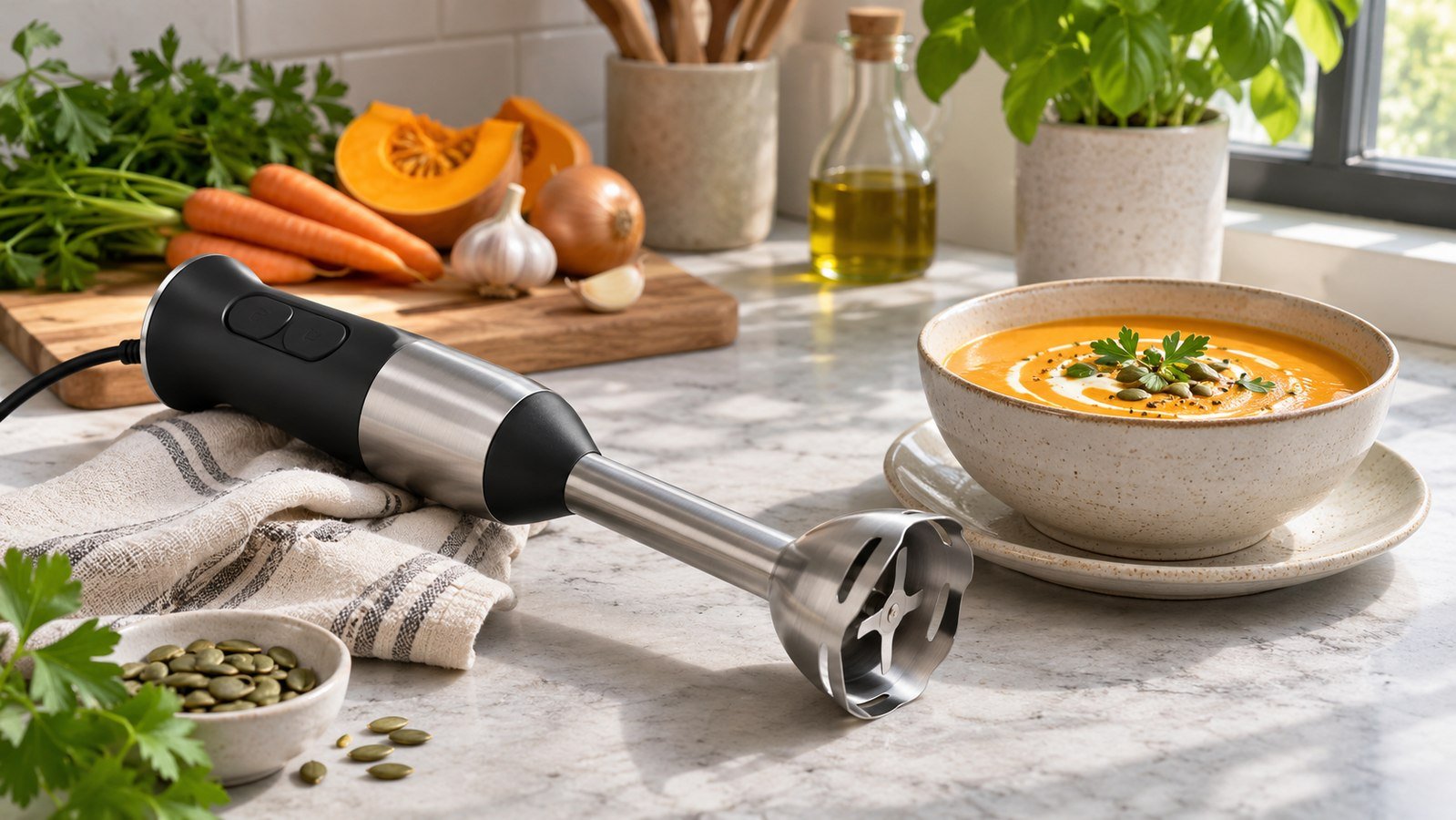
Look at the dimensions of the blending head and the immersed length the instructions allow. The head needs to fit inside the vessel and remain correctly positioned during use. Check the manufacturer’s directions for vessel material and any accessory intended to protect a surface. A wide head and narrow jar can be an awkward combination. Make sure a tall pot is not so deep that you have to hold the motor unit closer to food than the instructions permit.
Compare speed controls and grip
Check how the control works while you hold the motor body. A trigger or button can feel very different when you have to hold it through a whole recipe. The number of speeds is useful only if you can select them comfortably and the manual explains their intended use. If you have access to a display model, check how the shaft attaches and how much force it takes to release. Also note whether the blender needs to rest on a separate surface while you set down the pot lid.
Shop by kit contents
A simple motor and shaft can be enough for pureeing soup or blending a dressing. Bundle accessories can be useful if they replace another gadget you already want. The Braun MultiQuick 5 range illustrates how a manufacturer offers several configurations. Find the exact product code and compare the actual box contents. Check each accessory’s capacity and instructions rather than assuming a whisk or small chopper suits every recipe.
Plan around hot ingredients and cleanup
Use the manufacturer’s directions for temperature, vessel choice, immersion depth, and safe operation. Do not assume advice for a countertop blender applies to a hand blender, or vice versa. Read the manual before using a new unit with hot soup. Check which parts detach for washing, how motor and electrical parts should be cleaned, and whether any accessory can go in the dishwasher. For a well-used blender, the time required to clean around the head after a meal can matter more than a seldom-used attachment.
Decide between cordless and corded
A cordless design can be attractive when the nearest appropriate outlet is not close to the area where you prepare food. Look up charging access, permitted use while charging, and the size of the storage base. For a corded appliance, check that the cable can be routed safely in the work area. Compare the price, warranty, and storage footprint for both. If you want to make a single practical kitchen upgrade, see our small-appliance comparison for another way to identify which features you would use every week.
Compare the shallow and deep end of the job
Picture a small jar of vinaigrette and a larger batch of vegetable soup. The jar calls for a head that fits through the opening and can work at the level of liquid you usually prepare. The soup calls for a longer reach and a setup you can hold comfortably around a larger, suitable vessel. If you only make one of those dishes regularly, give it priority. Consider what already works for the other dish before paying for another accessory. A pitcher included in a set can be useful if it actually fits the blender and the portion.
Look at the blender’s weight and balance with the shaft attached. A display that shows only the motor body may give a different impression from the assembled product. Find out whether the controls work for the hand you usually use, and whether a speed selector can be changed without awkwardly moving the grip. Keep the appliance unpowered when inspecting the head or handling attachments as directed. If two people share it, ask both to try the ordinary grip and button position. That comparison is more informative than picking the longest shaft by default.
Know when a different appliance would make more sense
If you routinely need to break up firm ingredients or process quantities outside the hand blender’s instructions, compare equipment explicitly designed for that job. A countertop appliance can have different capacity, blade setup, and restrictions. A basic immersion model can still be cheaper to keep available for soups, sauces, and dressings if you already have separate equipment for harder tasks. Review the intended use on both manuals rather than treating any blade with a powerful motor as interchangeable.
For a buyer who cooks in small quantities, another possible choice is a shorter model with a dedicated vessel for the regular recipe. Compare pouring out the finished mixture and cleaning the vessel along with blending it. Ask whether it can sit upright, whether the head is quick to remove as instructed, and where everything dries after washing. A setup that fits next to the sink can save time even if it lacks extra attachments you would rarely use.
Check storage, parts, and service before ordering
Measure the drawer with the unit separated as the manufacturer permits. Check if the cable, charger, or accessory case adds space. Compare the cost of one alternative with and without the attachment you actually want. Under the retailer’s return rules, try a familiar recipe while following the manual, and observe setting changes, cleanup, and how easy it is to put everything away. Think & Buy relied on maker documentation and everyday buying criteria and did not run hands-on blending or motor tests.
Check how the blender sits when it is waiting between stages of a recipe. A shaft can drip onto the counter or need a place to rest while you get another ingredient. Look for a practical container or stand only if you need one, and follow the manual for safe handling. Also consider how you would use a smaller batch when you cannot fill your usual pot enough to blend in the permitted range.
At the final decision, compare every accessory you expect to reach for against its alternatives and its cleanup time. For example, a mixing attachment is easier to justify if you often make the same preparation and it is designed for the batch you use. Keep the basic model on the shortlist if your kitchen already has equipment that handles other tasks. Check the exact U.S. listing and the retailer’s exchange terms before your first use.
Frequently asked questions
Does a higher power rating mean it blends better?
The rating alone does not describe how a tool handles a recipe. Match the model’s documented applications and duty limits to the consistency and batch size you expect.
Do I need the accessory bundle?
Compare it with the whisk, chopper, or other equipment you already own. Price an accessory separately if you only expect to use one of them.
Can I blend in a nonstick pot?
Consult the instructions for the exact blender and cookware. Only use a setup compatible with both products and their permitted handling.