
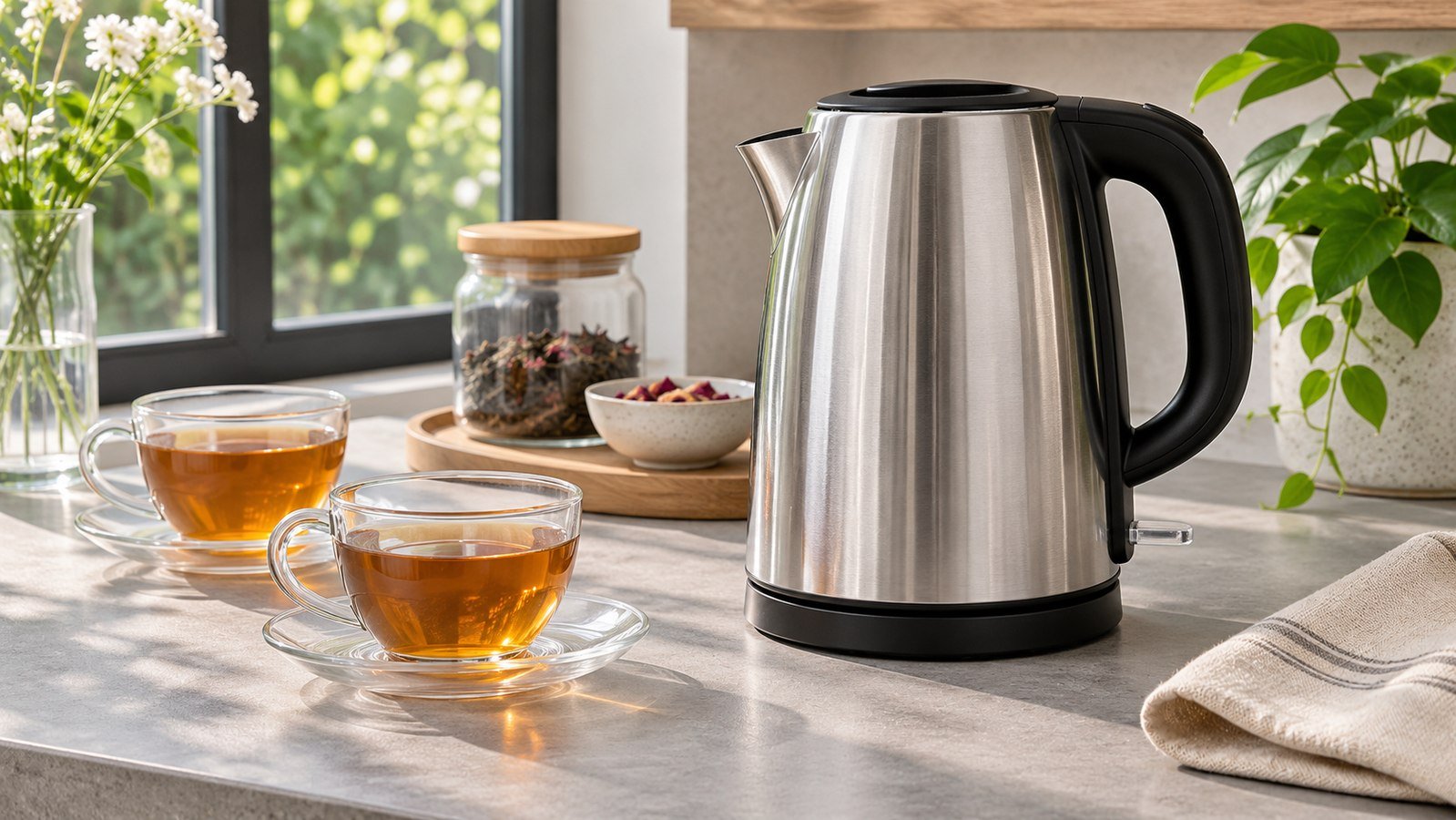
Pick the kettle for your usual drink
For a single mug or a household that boils water only occasionally, a straightforward kettle with a readable fill line and uncomplicated controls can be the best use of the budget. If you regularly switch between tea styles or want to reproduce part of a coffee recipe, adjustable temperature is worth comparing. If you want to pour slowly and direct water to different parts of a coffee bed, look at a gooseneck design. These are distinct reasons to buy and rarely carry the same weight in each kitchen.
Check usable capacity at both ends
A large maximum capacity does not tell you how much water the kettle needs to operate. Read the manual for minimum and maximum fill levels and compare them with a normal mug or brewer. If you make one drink at a time, a lower usable minimum may matter more than being able to fill several cups at once. If you share the appliance, find out whether you often boil another batch. Compare the kettle’s weight when filled to the level you expect to use, especially if the handle is positioned well away from the center of the vessel.
Decide what temperature controls would add
The OXO Brew Adjustable Temperature Kettle illustrates one variable-temperature format. OXO lists a 104–212°F selection range and a hold feature on this specific model. Those are manufacturer specifications. They do not show how evenly temperatures are maintained in each container or prove that all adjustable kettles behave alike. Read your tea or coffee instructions first and make a note of which settings you would use. A few appropriate presets can make a routine simpler if you do not need to select an exact number.
Think about the pour and the counter
Try a display unit’s handle and lid if possible. A narrow spout can let you direct a stream into a small dripper more deliberately, while a broad spout can fill a teapot faster. Check whether the water level is easy to read at the tap and how the lid opens with the handle in your hand. Measure the base and overhead clearance. Use the kettle on a suitable surface and follow the instructions about the location, power supply, and safe handling. For a brewer setup, see our pour-over coffee scale guide.
Plan for cleaning
Read the manual for cleaning and descaling rather than assuming every body or filter comes apart the same way. Think about whether you can reach the inside through the lid and whether the spout filter can be removed as directed. If your area has hard water, an easy cleaning routine may matter more than extra controls. A clear body makes the water level easy to see but can also make deposits more visible. Consider how you want the kettle to look and function after a year of routine use.
Compare the features you will actually use
Make your shortlist using two ordinary examples. One could be a small weekday drink, the other a full pot when someone comes over. Put the corresponding volumes and the storage footprint next to the cost of each model. Notice whether an extra keep-warm feature would save time or whether you generally pour immediately. A large water window, easy-to-clean lid, and accessible switch can deserve more attention than a long list of modes. For other purchases that compete for counter space, browse Kitchen & Dining.
Try a two-drink test before deciding
Set out your everyday mug and the largest vessel you intend to fill. Check where you would set each one when pouring and whether the kettle can be lifted without turning around another appliance. If you need a second boil in the morning, think about how much space there is for refilling while the first drinks are already on the counter. A larger kettle is useful for frequent shared drinks, but a massive unit can still be annoying when you make one small cup after lunch.
If your recipes ask for a particular temperature, check whether the controls display a target or what the kettle is currently measuring. That distinction matters when you return to a kettle minutes after it started. Read how the keep-warm period begins, whether it resumes after lifting the kettle, and how to end it. Those details are more practical than paying for the longest advertised hold. If the display or sound is hard to notice from where you stand, consider a simpler model whose status is easier to read.
Separate tea service from coffee technique
For tea, place the infuser or teapot beside the kettle, and check how the stream reaches it from the angle you normally use. If you usually prepare several mugs, fill each in sequence and consider where you could rest the kettle between pours. A short, broad spout may make that routine comfortable. A narrower spout makes more sense when the pattern or pace of pouring is part of the coffee recipe you want to practice. It still needs a handle that lets you stop the stream without a great deal of wrist movement.
If a kettle has an unusual shape, compare the stated dimensions with the base and handle included. Check whether the supplied cord can reach a suitable outlet without crossing the surface where mugs will be carried. A small footprint can be useful next to a coffee setup, but a compact base does not help if opening the lid means shifting the whole appliance. Photograph your usual arrangement or jot down measurements before shopping so you can refer to them at the store.
Check ownership details on the exact model
Look up the availability of a replacement filter or base if the maker lists one. Check which components are covered by the warranty, how a claim works in your region, and whether you would be able to return it after a normal trial. A readable switch and a robust lid are useful every day. Make the first trial a familiar tea or coffee rather than a new recipe, so you can tell which improvements came from the kettle alone. If you are replacing an existing model, note what you want to preserve as well as what you want to change.
Before comparing prices, check the kettle’s ordinary on and off indicators, the sound it makes when it finishes, and how easily you can set it back on the base. If you shop online, look for a clear manual and warranty contact for the U.S. model. Think & Buy consulted product documentation for this article and did not run temperature, noise, or durability tests. A straightforward model with a reliable workflow can be enough even if an adjustable kettle looks better on a specification sheet.
Frequently asked questions
Do I need a gooseneck?
A gooseneck is useful when stream placement and control matter to you. For filling a teapot or mug, a conventional spout can be more convenient.
Is a large kettle more flexible?
Only if its minimum amount still suits small drinks and you can handle its usual filled weight. Check both volume limits for the exact kettle.
Should I pay for temperature presets?
Compare the presets with the temperatures you use. Selectable temperatures can help if your recipes call for different settings regularly.


